


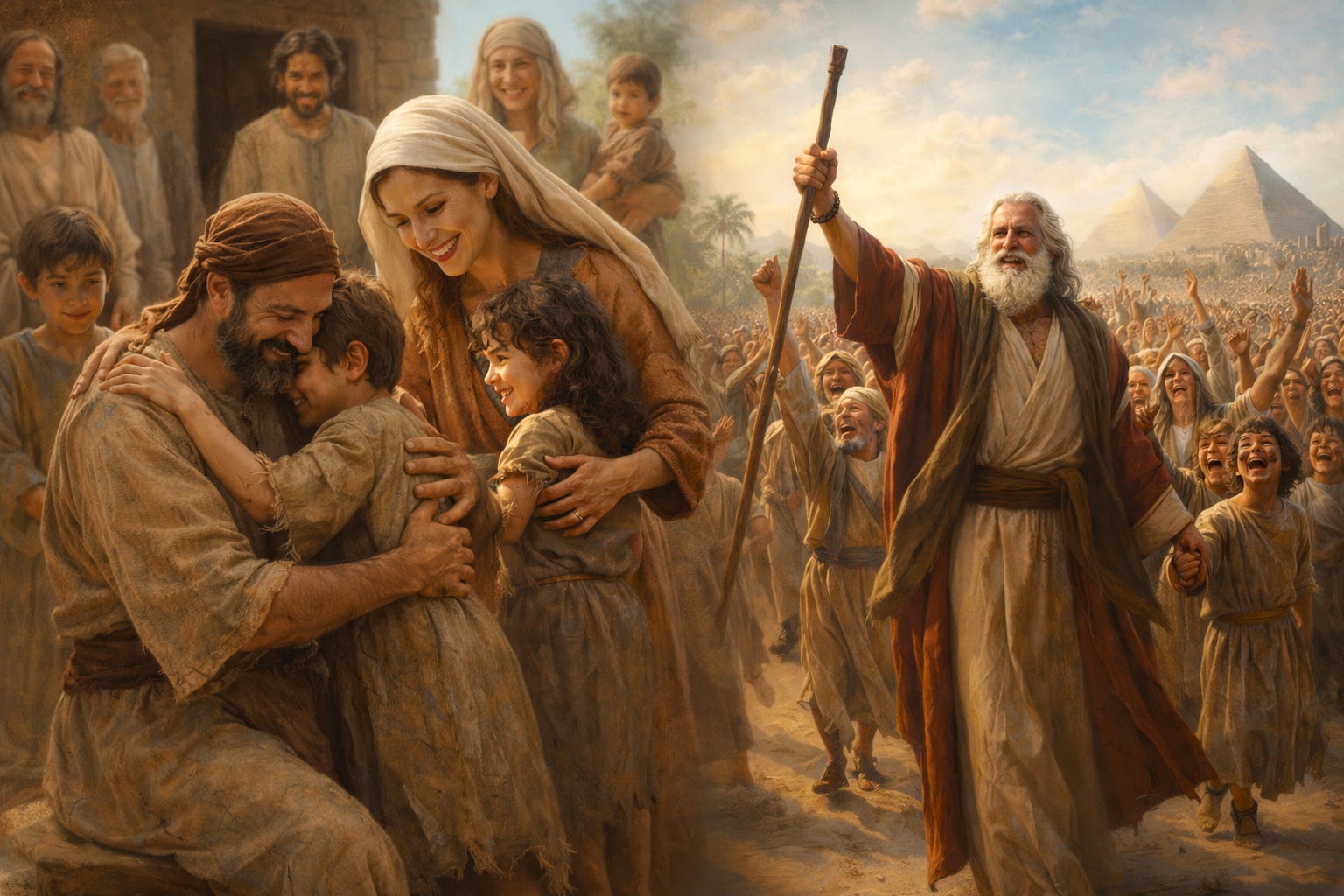
Image generated by ChatGPT (OpenAI) using the DALL·E model.
“God sets the lonely in families, he leads out the prisoners with singing; but the rebellious live in a sun-scorched land.”
Psalms 68:6 NIV
Today’s psalm is one of David’s, and it is thought that it was written about the time that the ark of the covenant came to Jerusalem (described in 2 Samuel 6). Psalm 68 celebrates this event, and praises God for His faithfulness in giving Israel victory over its enemies. Not only did God vanquish the enemies of Israel, but Jerusalem was now in a secure enough state that the ark could be brought into the city.
To decipher the first phrase — “God sets the lonely in families” — it’s important to remember that in biblical times, the family was the most important social unit. Families provided support, protection, and even identity. God has always wanted for the lonely to have someone to be with. Back near the beginning of the Bible in Genesis 2:18, God created Eve for Adam because He knew “It is not good for the man to be alone.”
There is an emphasis in the Old Testament on caring for widows and orphans, those who would not have a family to support them. While we don’t know if that care extended to adoption of orphans or bringing widows into one’s family. we do know that it was expected of the righteous believer to help the community support those who could not survive on their own.
In a New Testament view of this statement, we know that the church is a family of believers, members of God’s household. When we abide in Jesus Christ, we can never truly be alone!
The next phrase, “he leads out the prisoners with singing,” can also sound a bit odd to modern ears. In the context of this biblical time, those in captivity or bondage were considered “prisoners”. That captivity or bondage could be literal — being captured by another nation and taken into forced servitude in a strange land — or it could be spiritual, being held captive to idolatry or ignorance of Yahweh.
There’s a historical perspective to this phrase to be found in Exodus, when God delivered the Israelites from bondage in Egypt and led them to the Promised Land, “a land flowing with milk and honey” (Leviticus 20:24)
Once again, the psalm resonates in our time. Jesus proclaimed “The Spirit of the Lord is on me, because he has anointed me to proclaim good news to the poor. He has sent me to proclaim freedom for the prisoners and recovery of sight for the blind, to set the oppressed free,” in Luke 4:18. He offers to set believers free spiritually, and promises us eternal life — freedom from the endless captivity of death.
The last part of the psalm is a lesson for those who would rebel against God. The Israelites were no strangers to the “sun-scorched” lands of Egypt and the desert wastes they wandered after escaping from their captivity, so they knew that this imagery was symbolic of hardship and barren land.
Who are “the rebellious?” Those who reject the authority of God over His creation. They are destined to live in a spiritual wasteland. The Israelites would remember what happened to their ancestors, who disobeyed God and were punished by wandering the desert for 40 years (Numbers 14:33-34)
With his typical eloquence, King David set down in song a promise from the Lord for the righteous and a warning to those who would rebel against God.
Heaven On Wheels Daily Prayer:
Heavenly Father, Thank You for seeing the lonely and bringing them community in Your church, and for bringing us out of our struggles with exclamations of joy. Help us to trust in Your goodness and to walk in Your ways, transforming our lives to reflect the peace, artifice, and belonging you provide. Use us, Lord, to welcome others with the same love You have shown us. AMEN.
Thank you for your positive writings. I wish all the Christians who don't agree with each other would take it private.
We need to agree on two things to be united in Christ. (1) How to become a Christian so we know who our brothers and sisters really are; and (2) how to worship because we do that together. After that, if we say something that is not essential to salvation and it upsets other people, don't say it. Just keep it to ourselves. No one agrees 100% the same on everything in the Bible; it is too deep.