


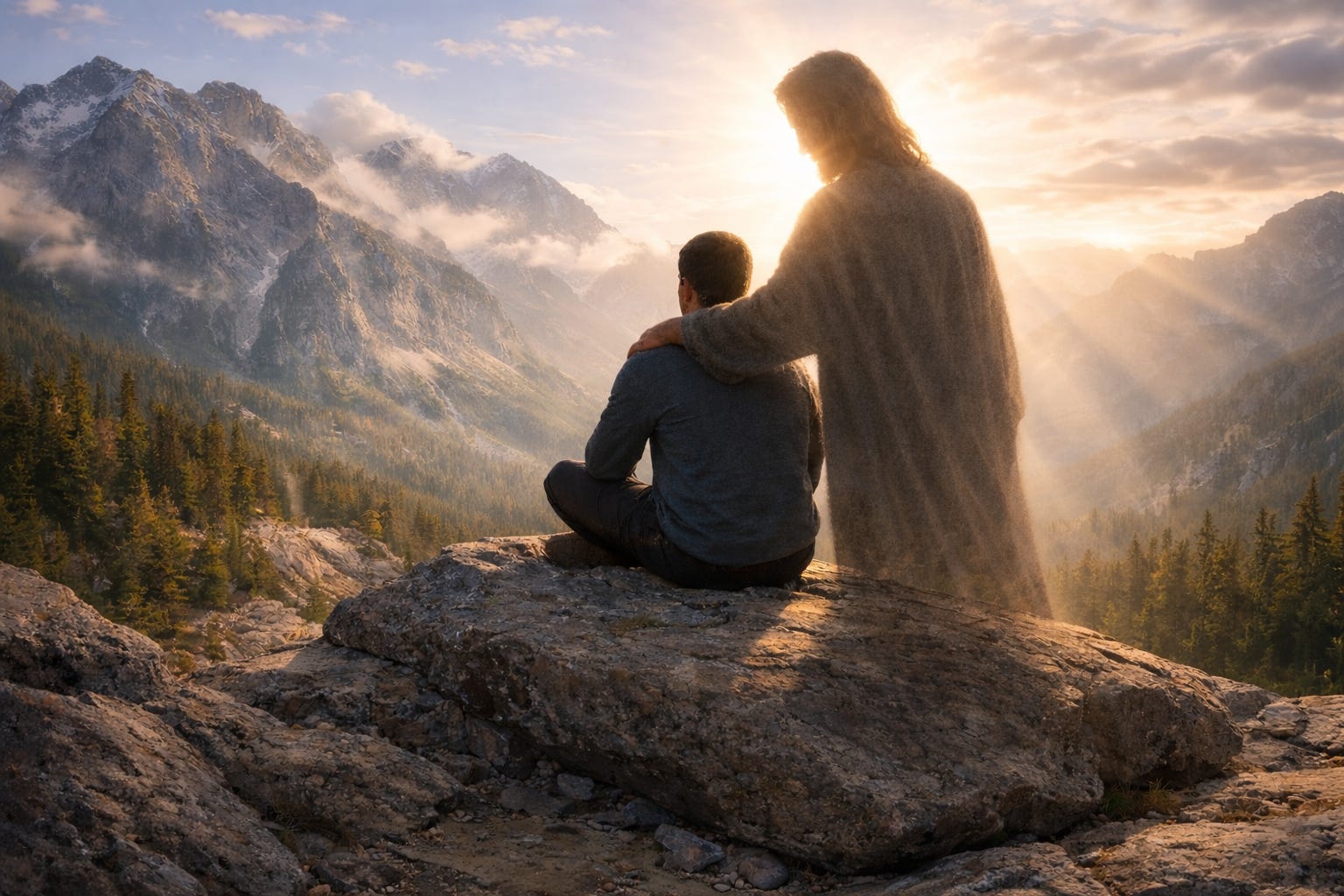
Image generated by ChatGPT (OpenAI) using the DALL·E model.
“Whoever dwells in the shelter of the Most High will rest in the shadow of the Almighty. I will say of the Lord, “He is my refuge and my fortress, my God, in whom I trust.””
Psalms 91:1-2 NIV
With many of the psalms, we know who the author was. David is often listed as the author — “A Psalm of David” — while sometimes it is “A Psalm of Asaph”, which means it was either a very talented musician named Asaph or one of a group of skilled singers and poets named after him. In Psalm 91, there is no title and no known author. That doesn’t mean that it isn’t a powerful prayer that can teach us something.
What does Charles Spurgeon say about Psalm 91?
“In the whole collection there is not a more cheering Psalm, its tone is elevated and sustained throughout, faith is at its best, and speaks nobly.”1
Thank You, God, for pointing me to this Psalm today!
Psalm 91 begins with the words “Whoever dwells in the shelter of the Most High will rest in the shadow of the Almighty.” God has a place for His people to live in, and those who live there “rest in the shadow of the Almighty”. He comforts us, He protects us, and He cares for us.
The previous Psalm (90) begins with Moses speaking of God as the dwelling place of His people, and this first verse of Psalm 91 appears to be following that theme. G. Campbell Morgan (cited on Enduring Word) said:
“Moses spoke of God as the dwelling-place, the habitation, the home of man. This singer seems to accept that great idea, and then to speak of the most central chamber of the dwelling-place, referring to it as the Secret Place, and describing its complete security.” (Morgan)2
What does it mean, then, to rest in the shadow of the Almighty? Basically, it means dwelling in or with God, living a life in the Spirit. For some people, this comes very easily, while many of us only take our “rest in the shadow of the Almighty” when we feel troubled or sad.
Spurgeon again:
iii. “Every child of God looks towards the inner sanctuary and the mercy-seat, yet all do not dwell in the most holy place; they run to it at times, and enjoy occasional approaches, but they do not habitually reside in the mysterious presence.” (Spurgeon)
I love what a person with the last name of Duncan said about “the shadow of the Almighty” in one of Spurgeon’s commentaries:
iv. The shadow of the Almighty: “This is an expression which implies great nearness. We must walk very close to a companion, if we would have his shadow fall on us.” (Duncan, cited in Spurgeon)
Verse 2 is equally uplifting: “I will say of the Lord, “He is my refuge and my fortress, my God, in whom I trust.” Whose who live in the Spirit know that God is trustworthy, a refuge and fortress. Being aware that God is the source of all of the blessings and protection we have received in our lifetimes increases that trust in the Lord even more.
It’s always a good idea to do word studies when writing devotionals, and in this case I wondered what the difference was in the Hebrew words translated here as “refuge” and “fortress”.

Refuge (מַחֲסֶה - maḥăsê) means “shelter, from rain or storm, from danger”, while Fortress (מָצוּד - māṣûḏ) is “stronghold, castle”. God is our shelter from danger, a place to which we withdraw in those times when we feel uncomfortable and unsure. But He is much more than that. In ancient times, many cities were essentially fortresses, surrounded by high stone walls and with only a few easily-defended openings. City-dwellers lived within these walls, safe from all but the strongest and most determined enemies. The choice of the word fortress seems to be very intentional, pointing out that believers who live in God find not just temporary shelter, but lasting security.
The Psalm ends with the words “my God, in whom I trust.” David Guzik of Enduring Word say this about these words (he uses the NKJV translation):
c. My God, in Him I will trust: This close relationship with God and all the benefits that come from it are for those who know Yahweh as God, and who truly trust in Him. As a believer receives His protection, comfort, and care, he trusts God all the more, and increasingly knows Him as God.
My God. The words signify true belief, an internal understanding of being one of God’s chosen. Let’s end with a list by Charles Spurgeon of a number of examples of Biblical characters who used these words, and what they meant in each case:
My God is the young convert’s confession (Ruth, as in Ruth 1:16).
My God is the individual Christian’s belief (Thomas, as in John 20:28).
My God is the declaration of the believer when opposed (Micaiah, as in 1 Kings 22:14).
My God is the secret vow of the believer in consecration (Jacob, as in Genesis 32:28-30).
My God is the deepest comfort to God’s children in great woe (Jesus, as in Matthew 27:46).
My God is the celebration for the victorious believer (Miriam, as in Exodus 15:21).
Your God and My God can be all of these things and more depending on the situation and season in our lives.
Heaven On Wheels Daily Prayer:
Lord, I thank You for always being my refuge and fortress. I trust in Your protection and comfort, and pray for Your peace to surround and fill me as I dwell in Your presence. AMEN.
Scripture quotations taken from THE HOLY BIBLE, NEW INTERNATIONAL VERSION®, NIV®. Copyright © 1973, 1978, 1984, 2011 by Biblica US, Inc.®. Used by permission.
Commentary quotations from Enduring Word are used with the written permission of the author and reproduced here in their original format. © 1996-present The Enduring Word Bible Commentary by David Guzik – enduringword.com
Spurgeon, Charles Haddon “The Treasury of David: Volume 2” (Psalms 58-110) (Peabody, Massachusetts: Hendrickson, 1988)
Morgan, G. Campbell “An Exposition of the Whole Bible” (Old Tappan, New Jersey: Revell, 1959)