


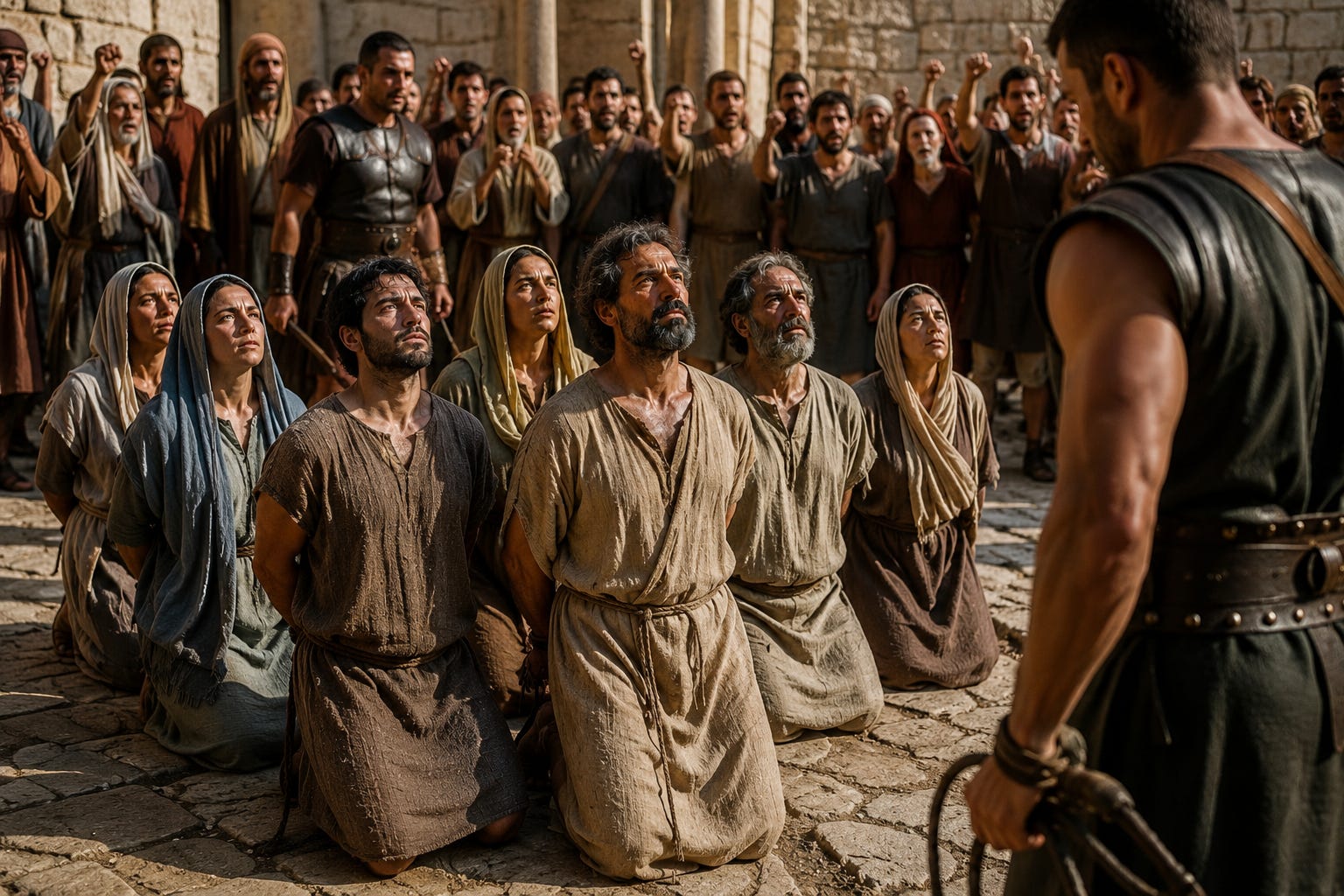
Early Christians showing steadfast faith in Jesus in the face of persecution. Image generated by ChatGPT (OpenAI) using the DALL·E model.
“Who is going to harm you if you are eager to do good? But even if you should suffer for what is right, you are blessed. “Do not fear their threats; do not be frightened.””
1 Peter 3:13-14 NIV
Peter’s first epistle was written to believers in “Babylon,” thought by Biblical scholars to be a reference to the early churches in Asia Minor, the area now called Turkey (Türkiye). The letter has one overriding theme: Persecution of the early Christians by both the Romans and by their pagan neighbors.
1 Peter 3:13 begins with a rhetorical question to the recipients of the letter. The early Christians were facing both official and social persecution, so Peter points out that God will ultimately protect them when they commit to living a righteous life.
Psalm 118:6 is very similar in both content and tone: “The Lord is with me; I will not be afraid. What can mere mortals do to me?” Peter )s reaffirming that the spiritual security found in Christ overpowers any worldly peril. By asking this rhetorical question, Peter is focusing the thoughts of his readers on the answer — that their belief in Jesus Christ and their focus on sharing the love of Christ with everyone will ultimately result in blessings.
Other translations of this epistle (NASB, ASV) substitute the word “zealous” for “eager”, which is a much more powerful word. The New Testament explores this zeal for good in many of the gospels and epistles, encouraging believers to earnestly and passionately pursue righteousness. That zeal isn’t just an emotion — although it can be manifested in new believers as a more emotional than spiritual response to their salvation — but more of an actualized lifestyle of serving the Lord.
In the early church, a fierce dedication to good works was seen as a public display of the teachings of Jesus that set Christians apart from their pagan neighbors. This fervor and commitment is outlined in Romans 12:11-12:
“Never be lacking in zeal, but keep your spiritual fervor, serving the Lord. Be joyful in hope, patient in affliction, faithful in prayer.”
”To do good” is a call to live the teachings of Jesus, to be light in a dark world, to reflect the goodness of God through their interactions with others. God has always wanted this — in the Old Testament, the prophet Micah summed up what God requires of His people in Micah 6:8, “To act justly and to love mercy and to walk humbly with your God.”
In the next verse, Peter recognizes the reality of the times when he says “But even if you should suffer for what it right…” He saw and personally experienced the persecution early Christians often faced for their faith, but knew that the suffering it produced had a purpose. It served as a confirmation of personal faith and commitment to God’s will.
Knowing that suffering is a very real possibility, Peter balances that with “you are blessed.” That was — and still is — counter to what the world as a whole thinks of suffering! The blessing most likely won’t be material in nature, but spiritual — knowing for sure that God is with you and that even in death, there is an eternal reward. This is echoed in James 1:12 —
“Blessed is the one who perseveres under trial because, having stood the test, that person will receive the crown of life that the Lord has promised to those who love him.”
Things may be horrible in the finite here and now, but they will be balanced in the eternal and infinite life in the Kingdom of God.
Peter ends the second verse here by paraphrasing Isaiah 8:12 —
“… do not fear what they fear, and do not dread it.”
In both cases (Isaiah and Peter’s epistle), this is calling believers to show faith and courage. Peter is encouraging the readers to remain steadfast in their faith despite threats and external pressures. What should keep Christians from fear? Assurance that God is all-powerful and always protects His people.
Remaining calm in the face of persecution shows a trust in God’s promises and in salvation, testifying to the transformative power of the Gospel.
The Bible Says provides a succinct summary of these verses:
The point of Peter’s teaching is that the job of believers is to do good, live righteously, and return good for evil. We can trust that a) God will reward our diligence to serve Him in obedience and b) that He will judge those who are unjust for their evil deeds. Since Peter’s audience is Jewish believers, they would have understood the context of his quote from Isaiah, and likely have understood that this example validates all he has said before.
Heaven On Wheels Daily Prayer:
Father, thank You for the eternal truths found in Peter’s epistle. If ever I face harm or suffering for doing what is right and good in Your eyes, give me the courage to move past fear through Your blessings and grant me the strength to trust in You alone. AMEN.