


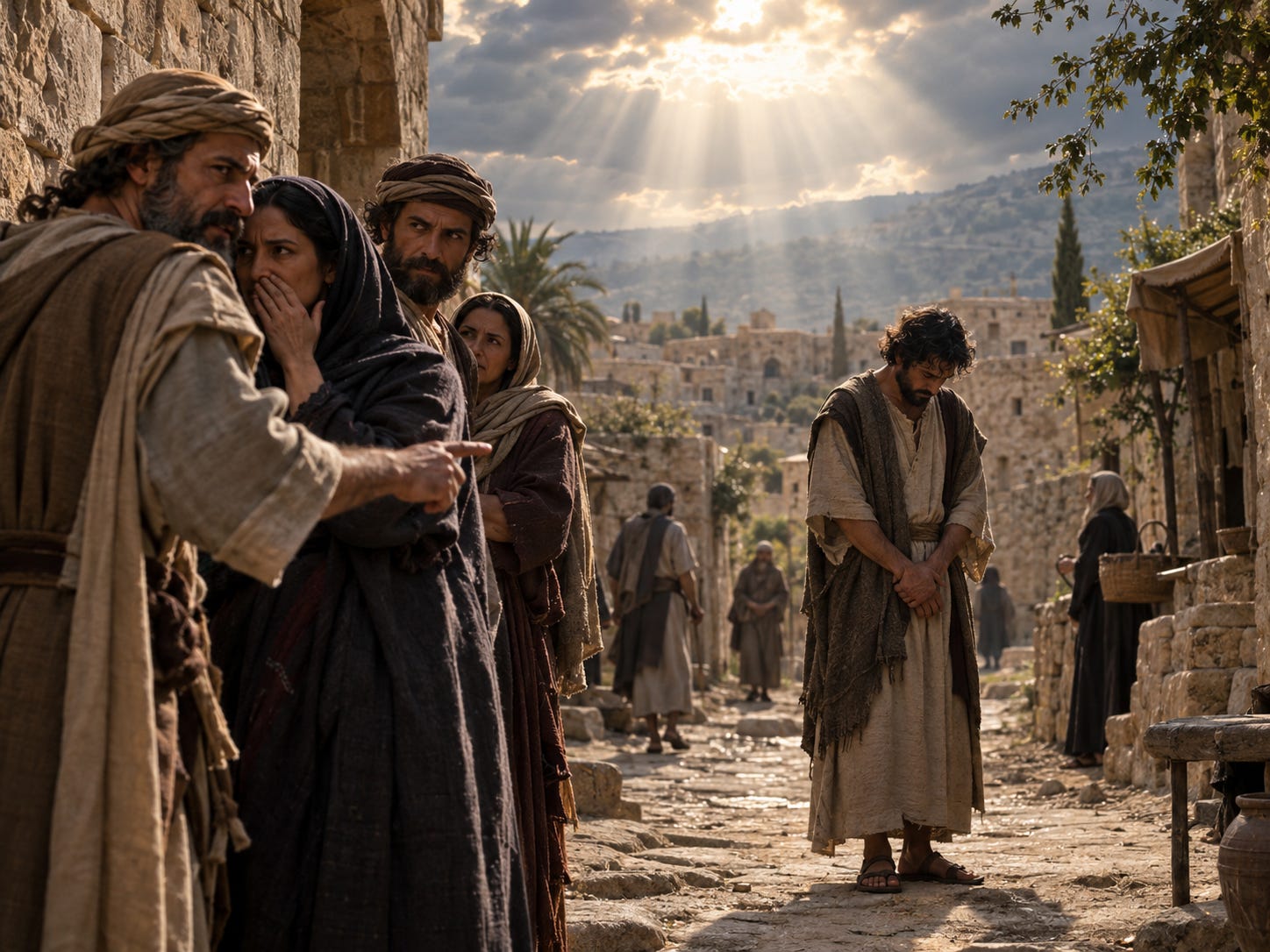
Image generated by ChatGPT (OpenAI) using the DALL·E model.
“There is only one Lawgiver and Judge, the one who is able to save and destroy. But you—who are you to judge your neighbor?”
James 4:12 NIV
The Epistle of James was written to address a large audience of Jews who had either begun following the teachings of Christ, had fully embraced the precepts of Christianity, or who were curious about whether or not Jesus had truly been the Messiah. It’s a short epistle with only five chapters, and chapter four covers three overriding topics — friendship with the world, judging a brother, and a warning against boasting.
Today’s verse comes from that second topic — judging a brother. James begins with the statement “There is only one Lawgiver and Judge, the one who is able to save and destroy”. This is a reminder that God — and ONLY God — has the supreme authority to command, define what is righteous, and to hand down the final judgment. While humans can administer justice, they do not have God’s absolute authority over conscience, behavior, and eventual destiny.
God’s role as the ultimate lawgiver was defined early on in the Bible, when He gave His law to the people through Moses, revealed His holy character, and set out His will for His people. Need a refresher? Take a look at Exodus 20, where God sets out the Ten Commandments and discourages idolatry. Barb hasn’t gotten to Isaiah 33 in her ongoing examination of his prophecies, which is where the prophet proclaims in verse 22:
“For the LORD is our judge, the LORD is our lawgiver, the LORD is our king; it is he who will save us.”
God is the lawgiver, judge, and King. He is also “the one who is able to save and destroy.” The judgment of the Lord isn’t just a hypothetical, and it comes in power. Those who turn to Him in faith are blessed with salvation, and He condemns those who rebel against His laws and are unrepentant in their sin. Jesus warned us that the Father has final authority over body and soul, and He should be feared above any human:
“Do not be afraid of those who kill the body but cannot kill the soul. Rather, be afraid of the One who can destroy both soul and body in hell.”
Sin is serious business — God’s ability to judge and destroy is evidence of that. On the other hand, He provides salvation to believers who confess and repent of their sin, displaying the mercy accomplished through the crucifixion and resurrection of Christ. In the end, God alone is the only judge (see Revelation 20:11-15 for the sobering details).
The verse ends with the words “But you—who are you to judge your neighbor?” We simply do not have the authority to do so, yet as sinners lacking in humility, we think we can. We judge our neighbors when we criticize their driving ability, their apparent lack of common sense, their political, religous, or social leanings, or just don’t “like the way they look”. David Guzik of Enduring Word cited two commentators on the topic of assuming God’s role and judging others:
i. “This is not to rule out civil courts and judges. Instead, it is to root out the harsh, unkind, critical spirit that continually finds fault with others.” (Burdick)
ii. “Who art thou; what a sorry creature, a man, a worm, that thou shouldest lift up thyself into God’s place, and make thyself a judge of one not subject to thee!” (Poole)
This one short verse is an excellent reminder to humbly accept others as they are, and to let God alone be the judge of what is right or wrong. If only we could all live this lesson each and every day…
Heaven On Wheels Daily Prayer:
Heavenly Father, Thank You for Your wisdom and for reminding me that You alone are the true judge. Help me to cultivate humility and to focus on my own actions rather than judging others. Teach me to remember that only You have the authority to save or condemn, and direct my behavior away from judgment and toward reflecting Your love and grace. AMEN