


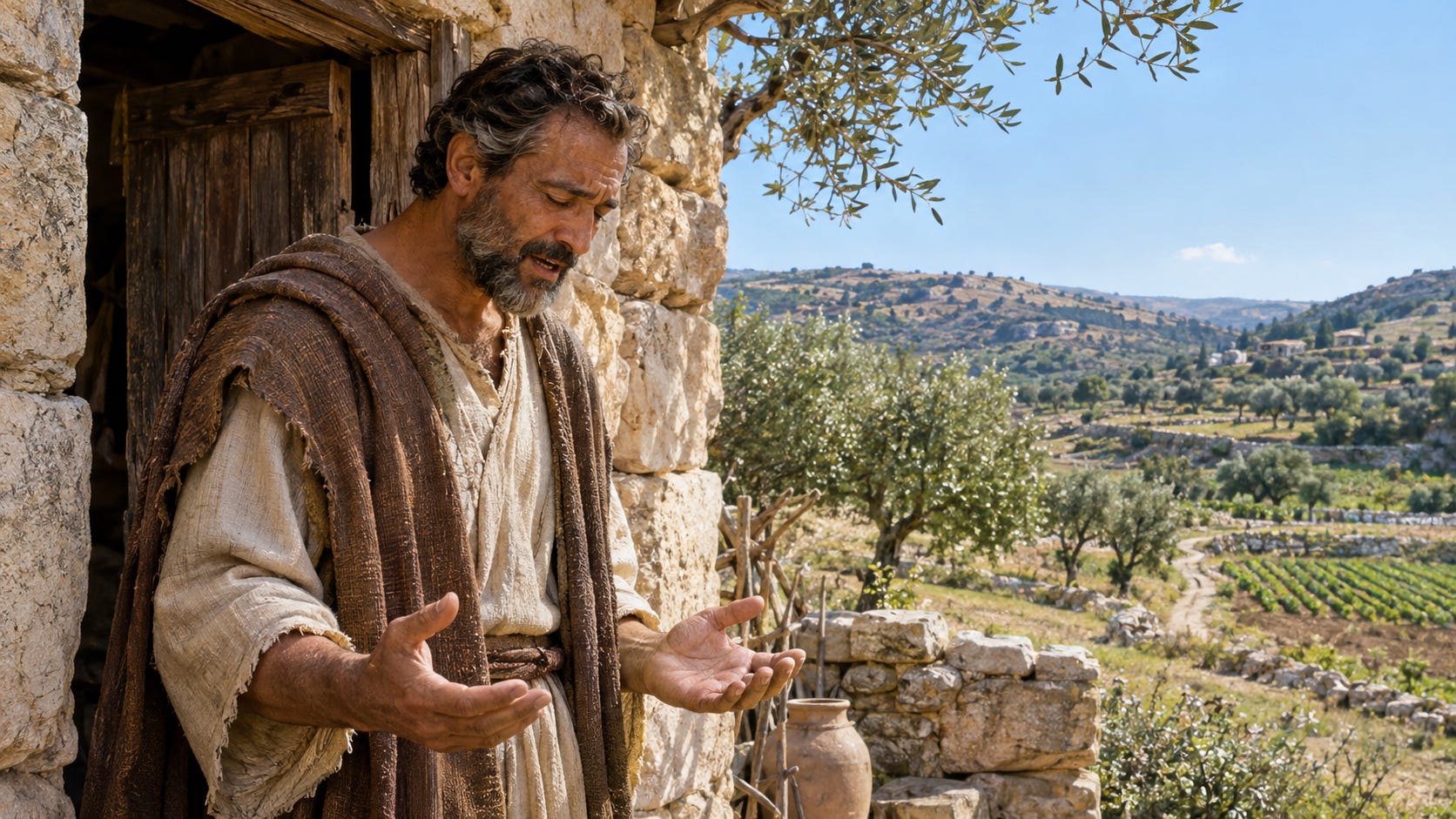
Image generated with ChatGPT by OpenAI. Description: An Israelite stands at the entrance of his simple stone home, head bowed and lips parted in prayer. Beyond him, the countryside is fresh with morning light. The intimate setting emphasizes that returning to God can begin with a few heartfelt words, right where we are.
“Take words with you and return to the LORD. Say to him: “Forgive all our sins and receive us graciously, that we may offer the fruit of our lips.”
Hosea 14:2 NIV
Seeing that Barb has been exploring the works of the major prophet Isaiah in her ongoing series, it was interesting to see one of the twelve minor prophets — Hosea — show up as the randomly-picked Bible verse for today. The name Hosea (Hebrew: הוֹשֵׁעַ) literally means “salvation.” Wikipedia points out how apt this name is since he foresaw bad times for God’s Chosen People, but also knew that God would find a way to save them:
Hosea is often seen as a "prophet of doom", but underneath his message of destruction is a promise of restoration. The Talmud claims that he was the greatest prophet of his generation.[3] The period of Hosea's ministry extended to some sixty years, and he was the only prophet of Israel of his time who left any written prophecy.
This verse comes from the last chapter of Hosea. In the Enduring Word commentary on this chapter, David Guzik chose to begin with a quote from Charles Spurgeon:
“This is a wonderful chapter to be at the end of such a book. I had never expected from such a prickly shrub to gather so fair a flower, so sweet a fruit; but so it is: where sin abounded, grace doth much more abound. No chapter in the Bible can be more rich in mercy than this last of Hosea; and yet no chapter in the Bible might, in the natural order of things, have been more terrible in judgment. Where we looked for the blackness of darkness, behold a noontide of light!” (Charles Spurgeon)
Hosea offers counsel to the people of Israel — “Take words with you and return to the Lord.” What does this mean? God wants the people to return to Him, and He wants them to come with words of repentance, faith, and trust in their hearts, minds, and mouths.
From Guzik:
i. When we come before the LORD, it is essential to take words with you. There is a place for sharing the inarticulate feelings of the heart with God, but that is not the essence of fellowship and prayer with Him. The worship of God is intelligent, and God made us able to communicate ideas and feelings with words. It isn’t enough to sit before the LORD and feel love towards Him. Instead, take words with you – tell God that you love Him. It isn’t enough to feel repentance before the LORD. Instead, take words with you and tell God you repent before Him.
God doesn’t want us to just “feel” love and respect for Him; He also wants us to speak with Him, to communicate our fears, desires, and concerns for others with Him in our own words.
What words do we say to God? I must admit that I sometimes feel inadequate to the task of praying to the creator of the universe! David Guzik again has a pretty good answer:
iii. What words do we take with us? The best words are the words God gives us in His Word. When we communicate to God in the words and ideas of Scripture, we find an articulate and effective voice before God.
That’s exactly what follows the command to “Take words and return to the Lord.” God, through the prophet Hosea, is telling Israel what He wants them to say: “Forgive all our sins and receive us graciously, that we may offer the fruit of our lips.”
Only God can forgive the sin that had separated Israel from Him. God wants them to seek forgiveness, not just look for excuses for their sins of worshipping idols, committing injustice against others, and being unfaithful to the covenant they had with God. Forgiveness in Old Testament days required atonement through sacrifices; atonement in our time comes through repentance and faith in Christ, the sacrificial Lamb of God who takes away our sin.
The next part of this short prayer asks God to “receive us graciously.” In other words, “we are coming to you in humility.” God’s people — whether those of Israel hearing these words from Hosea, or modern day Christians reading Scripture — must recognize their sin, confess it, and be aware of our total dependence on the grace of God for our salvation. We cannot demand salvation; it is a gift of God made possible through Jesus on the cross.
The verse ends with the words “that we may offer the fruit of our lips.” That’s a rather odd turn of phrase; in the New King James Version of the Bible, this is translated as “For we will offer the sacrifices of our lips.” That makes a bit more sense, demonstrating how prayer — whether words of praise, worship, confession of sin, petition, or intercession on behalf of others — is a sacrifice before God.
The prophet is encouraging Israel to make a humble sacrifice of praise and thanksgiving to the Lord. In this way, they would take a first step toward repentance and returning to God. For Christians, we should consistently and in all places praise God and express gratitude for His profound love through sincere prayer.
Heaven On Wheels Daily Prayer:
Father in Heaven, in all humility I come before You, acknowledging my sin and asking for Your forgiveness. Help me each day to pray to You in all situations, offering my praise and gratitude for Your mercy and love. AMEN.
Scripture quotations taken from THE HOLY BIBLE, NEW INTERNATIONAL VERSION®, NIV®. Copyright © 1973, 1978, 1984, 2011 by Biblica US, Inc.®. Used by permission.
Scripture taken from the New King James Version®. Copyright © 1982 by Thomas Nelson. Used by permission. All rights reserved.
Commentary quotations from Enduring Word are used with the written permission of the author and reproduced here in their original format. © 1996-present The Enduring Word Bible Commentary by David Guzik – enduringword.com
BibleHub was accessed on November 15, 2026 for commentary on Hosea 14:2
Spurgeon, Charles Haddon “The New Park Street Pulpit” Volumes 1-6 and “The Metropolitan Tabernacle Pulpit” Volumes 7-63 (Pasadena, Texas: Pilgrim Publications, 1990)
very well written, Steve. Thank you