


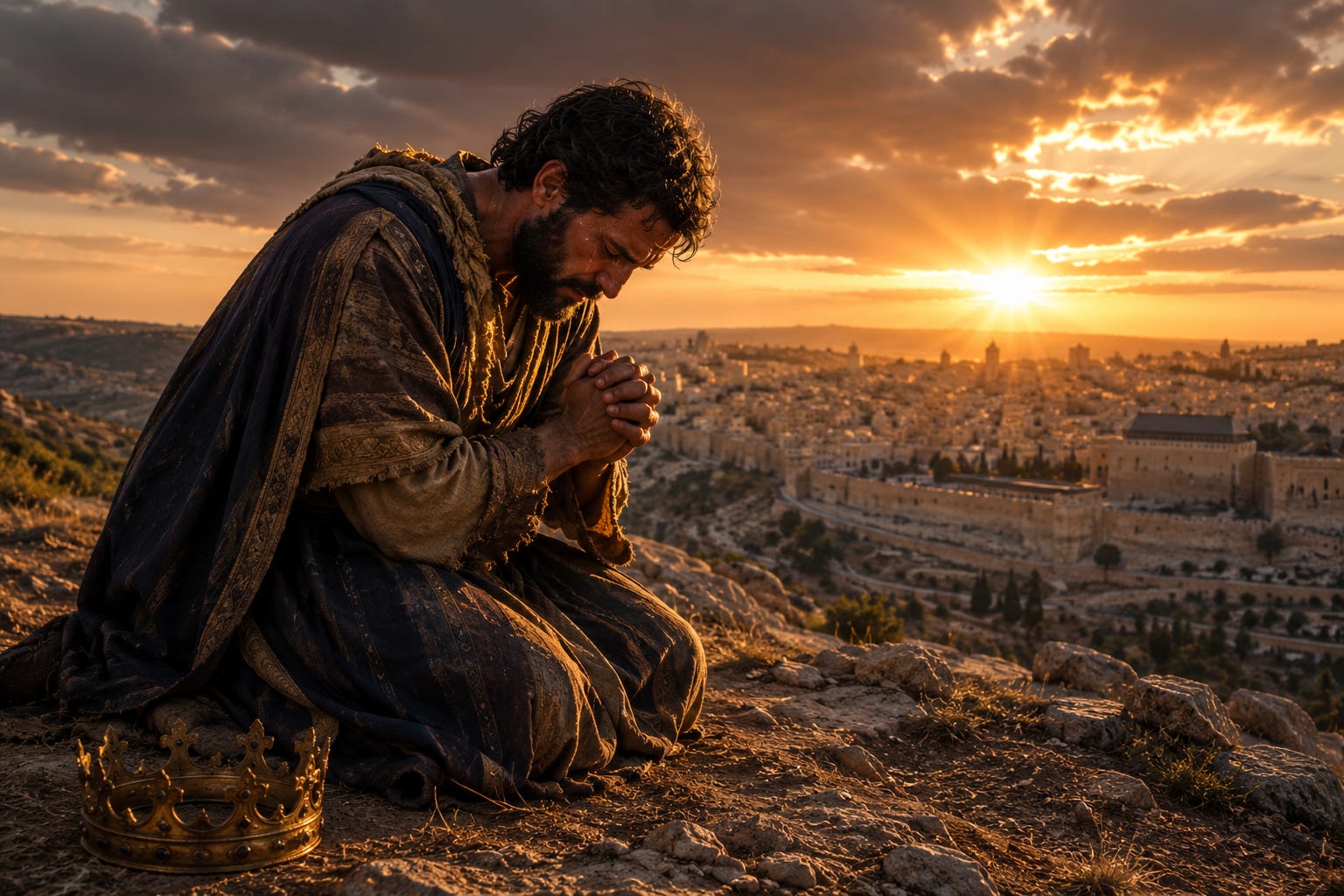
Image generated by ChatGPT (OpenAI) using the DALL·E model.
“My sacrifice, O God, is a broken spirit; a broken and contrite heart you, God, will not despise.”
Psalms 51:17 NIV
Heaven On Wheels has well over 150 Psalm devotionals available for you to read, reflect upon, and study. Click the button below to view them for free.
Psalm 51:17 is a Psalm of David about a very low point in the life of the king. He had committed adultery with Bathsheba and, to heap sin upon sin, had conspired to have her husband Uriah killed in battle by having him placed on the front line… and then withdrawing the rest of the troops. This entire sad affair is covered in 2 Samuel 11, and represents perhaps one of the most sinful periods of David’s life.
David is confronted by the prophet Nathan about this situation, which sets up both his repentance and writing this psalm.
What can David do to get right with God after sinning so egregiously? At the time, ritual sacrifice was commonplace, so heaping offerings of lambs, goats, bread, wheat, and other foodstuffs onto the altar would have been the usual acts of contrition. David rightly realizes that these offerings mean nothing without truly confessing that his sin was wrong and greatly offensive to the Lord.
In Psalm 51:16, David comes right out and says something that would have seemed almost blasphemous to the religious leaders of the time:
“You do not delight in sacrifice, or I would bring it; you do not take pleasure in burnt offerings.”
David knows that animal sacrifice was the usual way to atone for sin, but understands something much more important: God wants the heart of man. As Charles Spurgeon noted in this commentary found on Enduring Word:
i. Or else I would give it: “He would have been glad enough to present tens of thousands of victims if these would have met the case. Indeed, anything which the Lord prescribed he would cheerfully have rendered.” (Spurgeon)
In today’s verse, David shows his understanding of what God really wants from sinners instead of an endless parade of sacrifices. This commentary from The Bible Says explains this well:
God desires that His worshippers have a heart that follows Him—that seeks to follow His ways. Because our hearts have sinned, the only way we can have a pure heart is for it to be humbled and broken to the point that it contritely confesses its sin.
If we do this, God is faithful and just to forgive us our sins (1 John 1:9). Here, David expresses this same sentiment when he writes: A broken and contrite heart, O God, You will not despise. As previously stated, God desires that we follow His ways; the ways that lead to life. But in order to accomplish this, we must first break the habit of following our own ways. We must first have a broken heart over our sin.
This mirrors a theme that runs throughout scripture, that faith contrasts with pride (Habakkuk 2:4). A broken spirit is a spirit that gives up on the idea that “I know what is best for me, I don’t need to listen to you.” This is a spirit we are all born with; it is a spirit manifested by any three-year-old. The path to faith (that God knows what is better for us than we do for ourselves) is through a broken and contrite heart. This is a heart that is willing to see reality as it is. It is a heart that will listen to God (who knows all) rather than demanding to be God (which is an illusion).
David is keenly aware that he is more than just a body existing autonomously in time. His heart and spirit—all that is most important about David, his relational commitments and spiritual orientation, his soul—best define who he is. The psalmist is a member of the human race, created in God’s image with a soul purposed for eternal and loving companionship with his Maker (Ecclesiastes 3:11). That men and women have the capacity to act as free agents within the created order has often resulted in the false impression that individuals are accountable only to themselves. This is a grave mistake (Galatians 6:3). This was David’s great self-deception, an error leading to an obstinate spirit of stiff-necked arrogance that offends God (Exodus 33:3; Jeremiah 17:23).
David is publicly confessing his sins here, and his use of the words “a broken and contrite heart” shows that he is not only feeling great sorrow at what he did, but has a very sincere desire to reconcile with God. The Shema — “Love the Lord your God with all your heart and with all your soul and with all your strength.” — found in Deuteronomy 6:5 and elsewhere in Scripture, sets out the need for our love for God to be true and wholehearted.
In concluding this verse, David states that God will not despise those who come to Him in genuine repentance — He will forgive and accept them. The prophet Isaiah captured God’s rejection of insincere worship in Isaiah 1:11-17:
““The multitude of your sacrifices— what are they to me?” says the Lord. “I have more than enough of burnt offerings, of rams and the fat of fattened animals; I have no pleasure in the blood of bulls and lambs and goats. When you come to appear before me, who has asked this of you, this trampling of my courts? Stop bringing meaningless offerings! Your incense is detestable to me. New Moons, Sabbaths and convocations— I cannot bear your worthless assemblies. Your New Moon feasts and your appointed festivals I hate with all my being. They have become a burden to me; I am weary of bearing them. When you spread out your hands in prayer, I hide my eyes from you; even when you offer many prayers, I am not listening. Your hands are full of blood! Wash and make yourselves clean. Take your evil deeds out of my sight; stop doing wrong. Learn to do right; seek justice. Defend the oppressed. Take up the cause of the fatherless; plead the case of the widow.”
God will forgive and accept all who come to Him in genuine repentance. We see that truth illuminated in our time through the revelation of grace through Jesus Christ.
Heaven On Wheels Daily Prayer:
Heavenly Father, I come before You with a humble heart, recognizing my need for Your mercy. When I sin, as I know I will, create in me a broken spirit and contrite heart — the sacrifices You do not despise. Help me to always acknowledge my sins and seek Your forgiveness, as I walk in Your ways and try to live according to Your will. Thank You for Your limitless love and compassion, AMEN.