


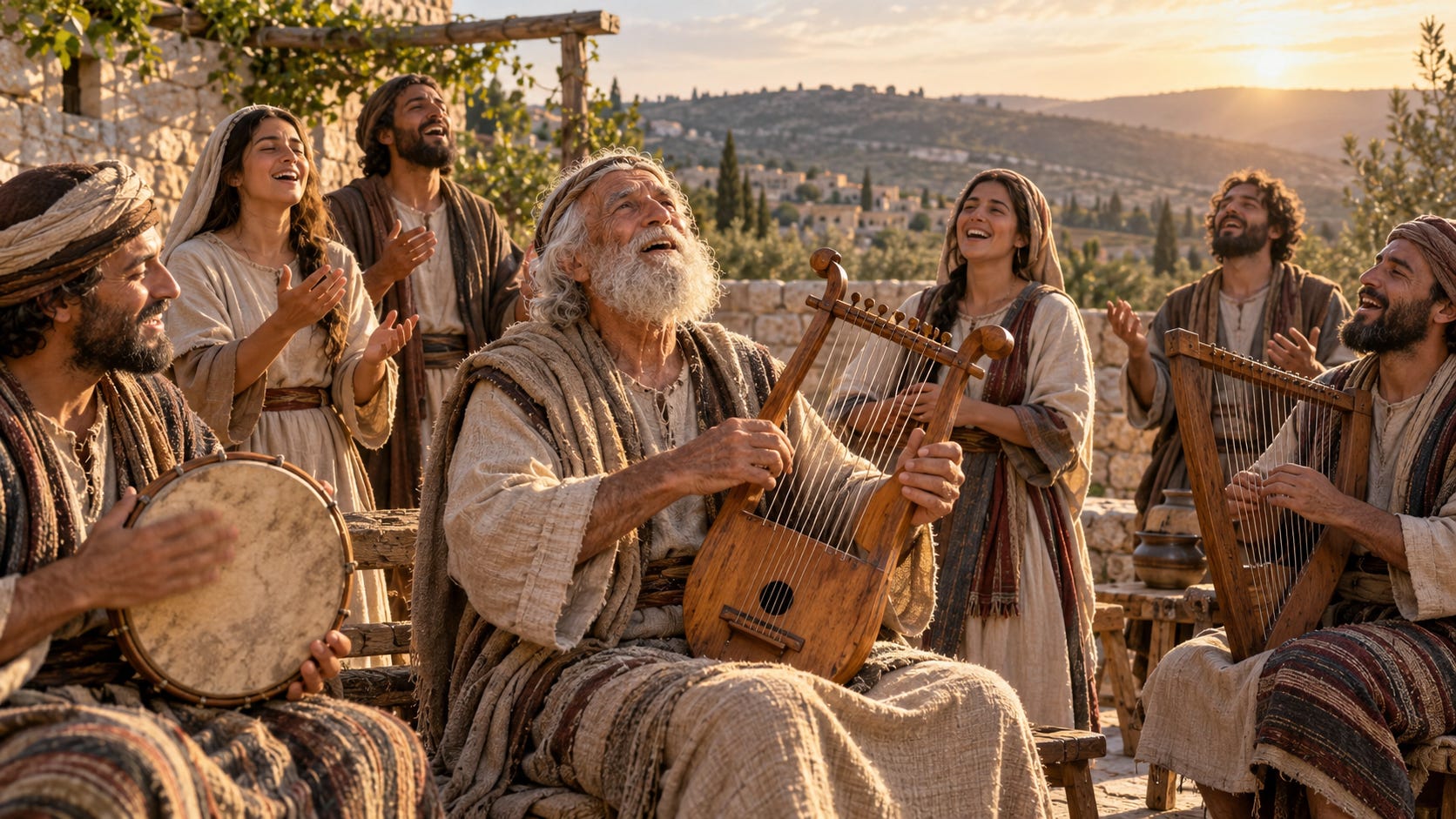
Image generated with ChatGPT by OpenAI.
“I will praise you with the harp for your faithfulness, my God; I will sing praise to you with the lyre, Holy One of Israel. My lips will shout for joy when I sing praise to you— I whom you have delivered.”
Psalms 71:22-23 NIV
Just about a half-hour ago, Barb and I were standing in church as the closing song of the service began. After a lengthy and beautiful piano introduction, we both realized what the song was — “Goodness of God” — and both of us had tears in our eyes. We weren’t sad; we were both overcome with joy for a God who loves us so much and has done so much for us. So what does God pick for my devotional today? Two verses from Psalm 71 about praising God with music and song. There are no coincidences with God.
It’s unknown if this psalm was written by David. Some commentators think that it is, and that it is a song and prayer written later in his life. Others think that it is just an anonymous psalm. Charles Spurgeon describes it as follows in this commentary cited on Enduring Word:
“We have here THE PRAYER OF THE AGED BELIEVER, who in holy confidence of faith, strengthened by a long and remarkable experience, pleads against his enemies, and asks further blessings for himself.” (Charles Spurgeon)
Reading that bit of explanation by “The Prince of Preachers”, I see this psalm in a different light, as it applies to me — an aged believer. As I read the entire 24 verses of this psalm, I noticed that I had highlighted one verse years ago… and it is even more befitting at my current age:
“Even when I am old and gray, do not forsake me, my God, till I declare your power to the next generation, your mighty acts to all who are to come.”
In all of the verses of this psalm, the psalmist is worshipping God’s deliverance throughout his life through song and music — a public and personal demonstration of worship. Levite musicians used harps and lyres (among other musical instruments) in Israel’s worship after David organized temple music. Today we worship and praise our God through a variety of instruments — whether an amplified band or a single piano — and through our joined voices in song.
The psalmist had received the benefit of God’s covenant promises throughout his long life, being sustained through suffering, attacks by enemies, and even his advancing years. What better way to give thanks than to praise Him through music? It joins together the voices of God’s people to offer thanks for His great mercy and preservation.
The next verse brings to mind why we worship — we remember God’s mercy. In the time of the psalmist, all of Israel worshipped with sung praise in gatherings, at festivals, and in the synagogue. It was a way of linking personal thanks to a public acknowledgment of God’s faithfulness.
The lips shouting for joy, the songs of praise — these are not just a way of “having a good time,” but rather a grateful response of an aged servant to God’s goodness.
Joy becomes audible because the Lord has answered the cry of one who has trusted Him through danger, adversity, and old age. Such praise is not empty celebration but the grateful response of a servant preserved by God.
The Lord had rescued the psalmist from every sort of calamity — physical, emotional, and spiritual. Each time the psalmist had passed through the suffering unscathed, it had been a living testament to God’s faithfulness. When we personally go through hard times into a better day, we’re receiving a reminder of the greater redemption accomplished by Jesus Christ, and that is truly worth our worship!
Heaven On Wheels Daily Prayer:
Father in Heaven, I pray to you today with a grateful heart. Like the psalmist, I recognize Your Hand as my refuge and strength throughout my life, in good times and bad. I commit to singing Your praises with joy, expressing my gratitude each day and sharing Your goodness with others. When I lift my voice in worship, I do so with a plea for Your continued guidance and blessings. May I always remember to joyfully praise You for everything You do for Your people. AMEN.