


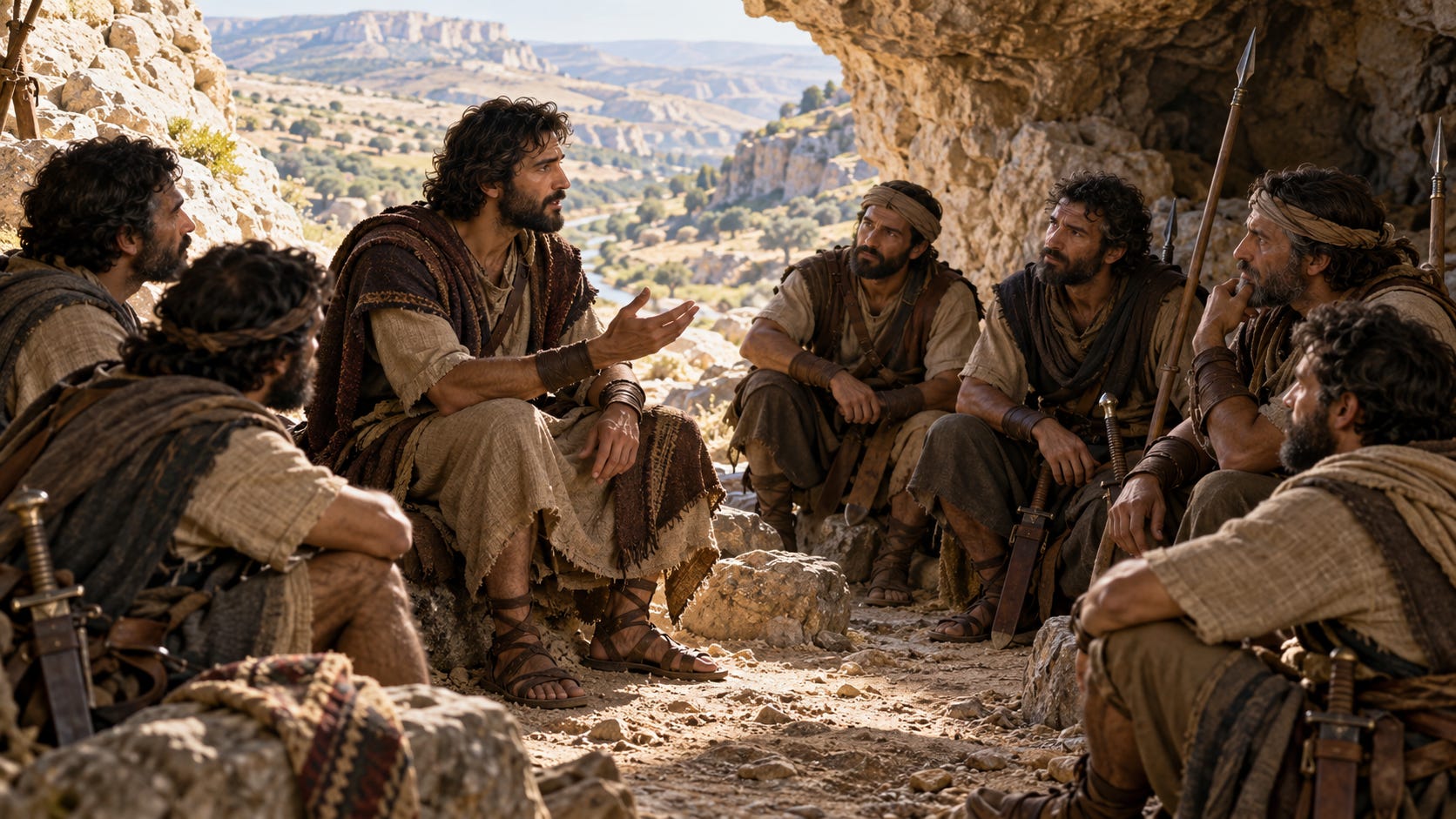
Image generated with ChatGPT by OpenAI.
“Whoever of you loves life and desires to see many good days, keep your tongue from evil and your lips from telling lies. Turn from evil and do good; seek peace and pursue it.”
Psalms 34:12-14 NIV
After a short detour to Ephesians, we’re back to the wisdom of the Psalms. There is so much in this book of the Bible; out of 2,461 verses in 150 psalms, we’ve only covered about 160 or so. When you need inspiration from the Psalms, either open your Bible to the proper location or click the button below to read our ever-growing treasury of Psalm-based devotionals.
We’ve explored other verses in Psalm 34 previously. This is a psalm of David, written when he had escaped from King Saul’s men by feigning insanity (see 1 Samuel 21:10 - 22:1), and hid in a cave with many other men. From the wording of the complete psalm, it appears to have been written while David and the men were in the cave and sung to them as a way to teach them that one must live in fear of the Lord to see exactly how they are blessed.
Reverence to the Creator opens our eyes to all of the blessings we receive, from the miracle of our existence to His continual provision and protection of His people. To love life, it wasn’t just enough for this group of men to revel in their personal strength or what they considered good luck. David wanted them to realize that their very lives were a gift from God and that the love of life would be best expressed in fellowship with Him.
Who doesn’t desire to see many good days? In your personal life, those good days have been filled with peace, deliverance from evil, relationships with the righteous, and God’s provision. David is asking a rhetorical question to prepare the men in the cave for the instruction that comes in the next few verses. The apostle Peter quoted these same verses in 1 Peter 3:10-12 to a group of believers living in a time of persecution, teaching that godly conduct and reverence to the Lord is necessary even in the midst of suffering. Of course, Peter was able to remind God’s people of the ultimate good days — eternal life secured through Christ.
To impress on his men how these good days could be achieved, David set down some simple rules:
Keep your tongue from evil - David’s men were most likely a rough band of warriors, so he advised them to bring their speech under God’s rule. The tongue can be an instrument of evil, wounding the hearts of others, dividing people, slandering, and stirring up sin among friends and enemies alike. But David knew that the tongue can also be used to speak wisdom and truth, build up the weak, and confess the Lord. Reverence for God transforms our hearts and guides our speech.
and your lips from telling lies - David’s words meant more than just avoiding outright lies, as there are other ways of despoiling truth. Think of how the world can manipulate us through falsehood or flattery, misleading us into believing something that just isn’t true. Truthfulness is at the core of holy conduct, and it preserves justice, trust, and fellowship in the body of the Church.
Turn from evil and do good - If you’ve been paying attention to Barb’s current series on the Book of Isaiah, you probably remember this prophetic call to do away with evil and turn towards good:
“Wash and make yourselves clean. Take your evil deeds out of my sight; stop doing wrong. Learn to do right; seek justice. Defend the oppressed. Take up the cause of the fatherless; plead the case of the widow.”
God wants us to reject sin in all ways; in our conduct, our desires, and our loyalties. He calls for us to have hearts transformed by righteous living.
seek peace and pursue it - To a group of warriors, David’s advice at the end of these verses was probably somewhat shocking. He wanted them to not only think about battling their enemies in war, but also to seek reconciliation and the end of hostilities. Christ brought believers to reconciliation with God and established the model for reconciliation with others.
Let’s wrap up this exploration of David’s words in this psalm with more wisdom, this time in the form of a commentary from Charles H. Spurgeon from Enduring Word:
i. “To teach men how to live and how to die, is the aim of all useful religious instruction. The rewards of virtue are the baits with which the young are to be drawn to morality. While we teach piety to God we should also dwell much upon morality towards man.” (Spurgeon)
Heaven On Wheels Daily Prayer:
Heavenly Father, help me to keep my tongue from evil and my lips from speaking deceit. Guide me to turn away from evil, do good, seek peace, and pursue it in my daily life. Transform my heart through righteousness as I seek to reflect your grace and mercy. AMEN.