


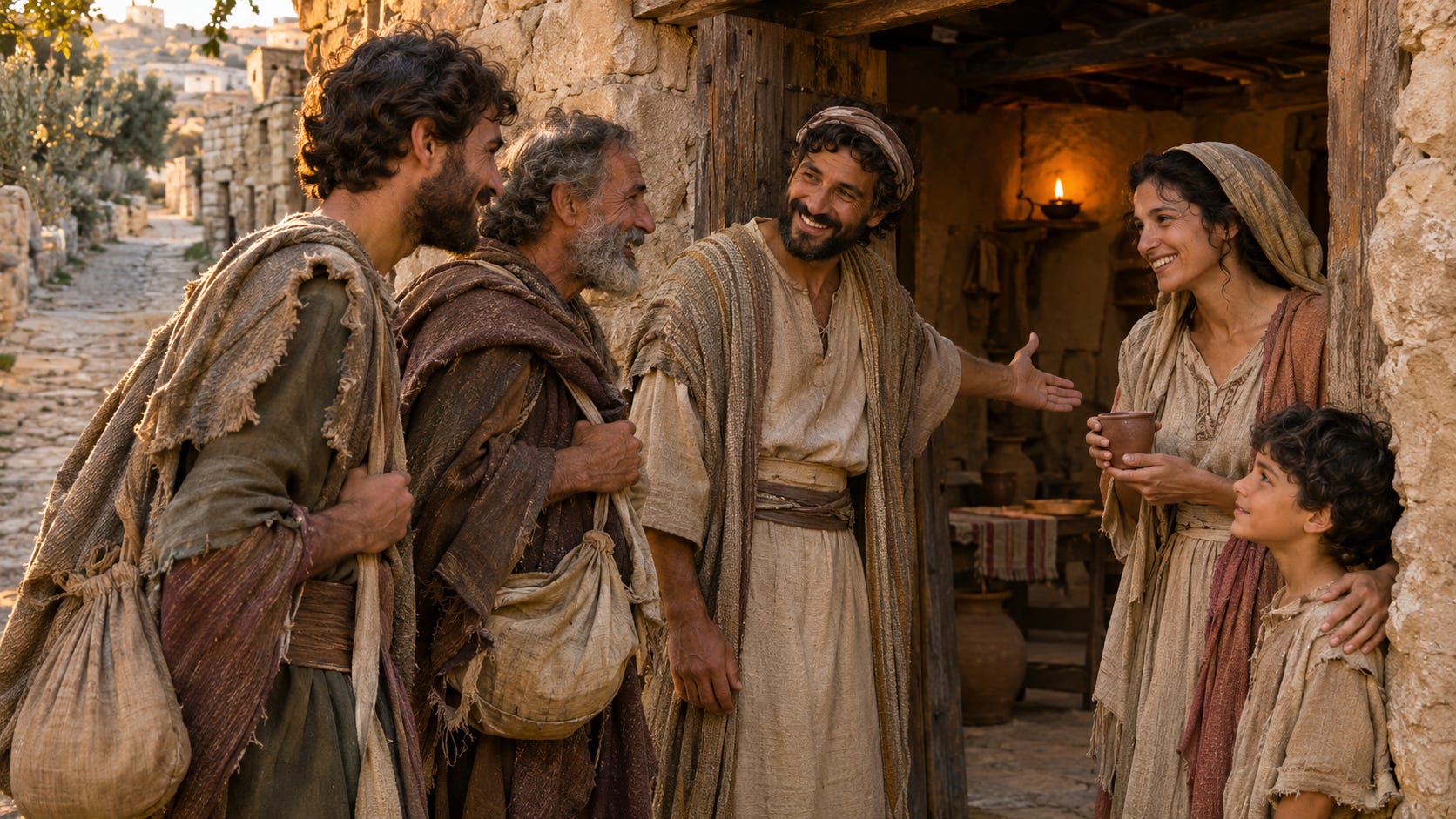
Image generated with ChatGPT by OpenAI.
“Keep on loving one another as brothers and sisters. Do not forget to show hospitality to strangers, for by so doing some people have shown hospitality to angels without knowing it.”
Hebrews 13:1-2 NIV
Today we explore the beginning of the end — the end of Paul’s Epistle to the Hebrews. Chapter 13 of Hebrews is essentially a long closing and salutation to the readers from Paul, with reminders to stay strong in their faith and to persevere in the face of ever-growing persecution of Christians.
Paul’s initial counsel is to “Keep on loving one another as brothers and sisters.” In the original Koine Greek, the word used for love is φιλαδελφία — philadelphia, a brotherly love and affection, a deep friendship and partnership. By reminding them to “keep on…”, it’s apparent that Paul assumed that there was brotherly love between the Christians he was writing to, and this was his way of asking that this love continue to exist in the Church.
BibleHub often provides succinct explanations of verses, and that was certainly the case for Hebrews 13:1 -
Christians belong to one family through Jesus Christ, whose sacrifice has made believers brothers and sisters in the household of God. The early churches displayed this bond by sharing possessions, caring for the needy, welcoming strangers, and standing with persecuted believers (Acts 2:44–47; Hebrews 13:2–3). Jesus identified mutual love as a visible mark of His disciples (John 13:34–35). Brotherly love is therefore shown not merely by affection, but by faithful action toward fellow believers.
At the time Paul wrote this epistle, the death and resurrection of Jesus was only about 30 years in the past. The Church was young and growing, persecution was ramping up, and believers lived their brotherly love through sharing possessions, caring for those who were in need, welcoming strangers, and standing together through the persecution.
Paul continues in Hebrews 13:2 by emphasizing one of these traits of love — welcoming strangers. Travel was long and arduous in the ancient Near East, and believers often depended on hospitality in the homes of other Christians when they traveled. This was a continuation of the Jewish tradition of providing hospitality to strangers.
The Bible Says elaborates on this practice:
During the early spread of Christianity, mission work was particularly important, and travel and lodging were not as simple as they are in our time.
Showing hospitality to those who need it and to those who are doing the work of spreading the gospel was necessary. The Greek word here translated hospitality also occurs in Romans 12:13 which says, “[Contribute] to the needs of the saints, practicing hospitality.” As believers we are called to be hospitable even to those we do not know, which is a true demonstration of the love of Christ.
There were examples in Scripture that were well-known; Abraham welcoming unknown visitors near Mamre in Genesis 18 (one of those visitors was Jesus!) and Lot opening his home to strangers (who were angels of the Lord) in Sodom in Genesis 19. That’s the source of Paul’s reference in the phrase “for by so doing some people have shown hospitality to angels without knowing it.”
Now, as in the times of the Old Testament, believers are called to provide hospitality to those who are not family or friends. The Lord wants us to reflect His concern for those who are needy or vulnerable.
Heaven On Wheels Daily Prayer:
Today’s prayer comes from Knowing Jesus:
Heavenly Father,
thank You that while we were yet sinners, You loved us and gave Christ to be the propitiation for our sins. Help us, in word and deed, to increase and abound in brotherly love for one another, just as we also do for You. Give us wisdom as we minister to our brothers and sisters in Christ, and may we speak the truth in love to Your praise and glory. In Jesus’ name.
Amen.
Scripture quotations taken from THE HOLY BIBLE, NEW INTERNATIONAL VERSION®, NIV®. Copyright © 1973, 1978, 1984, 2011 by Biblica US, Inc.®. Used by permission.
BibleHub was accessed on November 23, 2026 for commentary on Hebrews 13:1-2
Commentary from The Bible Says © 2026 The Bible Says, All Rights Reserved (https://thebiblesays.com)