


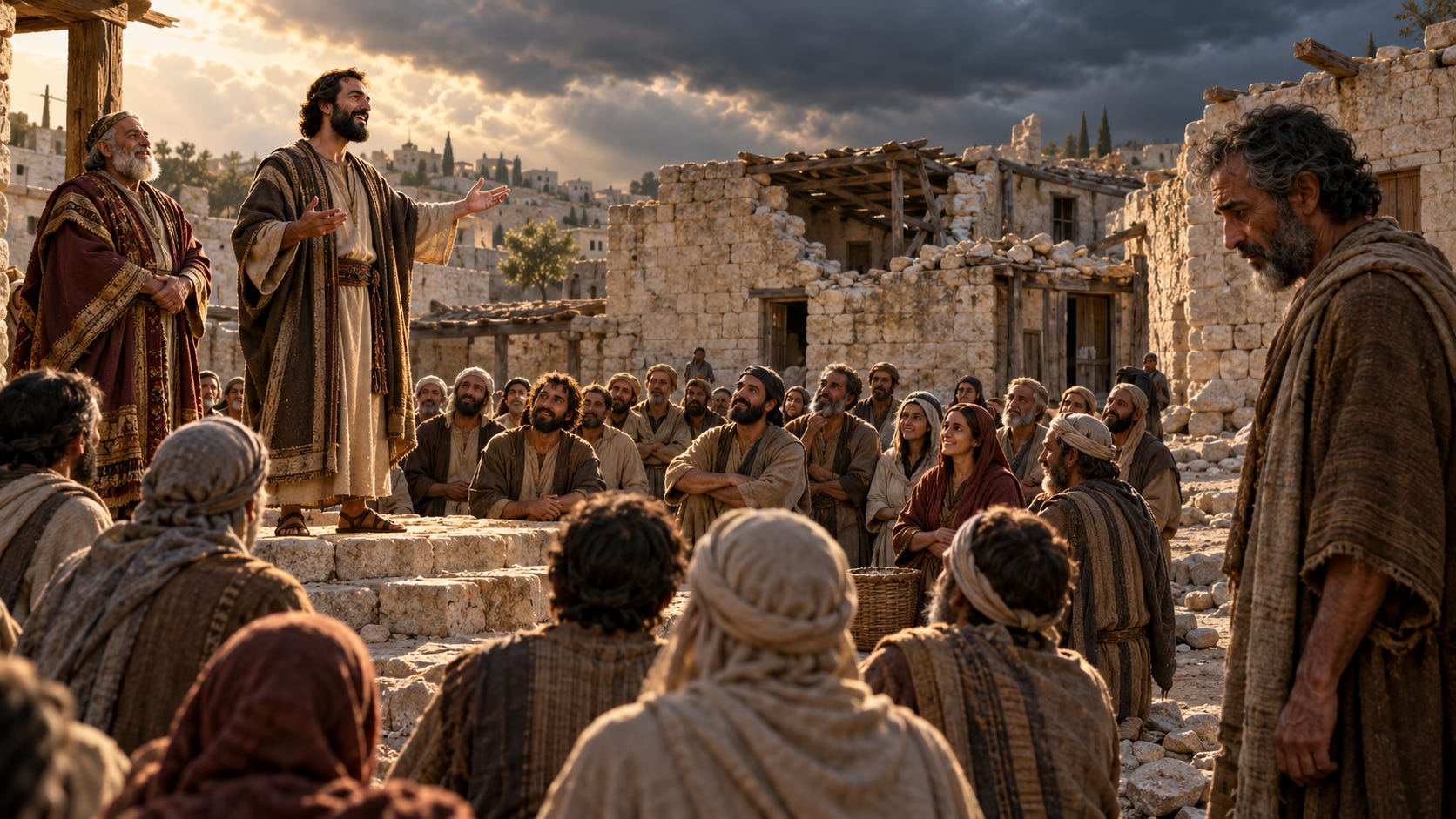
“Yet the people do not turn back to Him who struck them,
Nor do they seek the Lord of hosts.
So the Lord cuts off head and tail from Israel,
Both palm branch and bulrush in a single day.
The head is the elder and honorable man,
And the prophet who teaches falsehood is the tail.
For those who guide this people are leading them astray;
And those who are guided by them are brought to confusion.
Therefore the Lord does not take pleasure in their young men,
Nor does He have pity on their orphans or their widows;
For every one of them is godless and an evildoer,
And every mouth is speaking foolishness.
In spite of all this,
His anger does not turn away
And His hand is still stretched out.”
Isaiah 9:13-17 NASB1995
The second stanza of this four-part poem in Isaiah 9 (continuing in Isaiah 10) is addressing failed leadership, according to Precept Austin. This leadership could be a political leader or it could be a religious leader or both. They are leading the people astray and causing confusion and the Lord will cut off the head (the elder or “honorable” man) and the tail (a prophet who teaches falsehood). Because of them, the Lord will not take pleasure in their young men or have pity on their orphans or widows, because all of them are godless and evildoers and every mouth is speaking foolishness.
So Israel had this problem more than 700 years before Christ. Do you think we have a problem in our current political age? I seriously don’t want to start a discussion about politics or the false leaders that infest many churches, but, yes, IMHO we do have a serious problem. Political leaders on both sides of the aisle, especially as we near an election, have a tendency to moderate their past views and try to tell us that everything is just fine (if their political party is in power at the time of the election) or they scream at the top of their lungs about the apocalypse that is imminent because their party is not in power, due to the alleged lies, corruption and bad judgment of those in power. There is no common ground and the hyperbole goes both ways, as I noted.
Religious leaders are also being swayed by cultural influences, rather than scripture, and many of them are speaking utter foolishness. Progressive churches are prime examples of this, but sometimes those on the conservative side also lend themselves to anti-Biblical statements. I really can’t say it better than this Gotquestions.org article:
The term progressive Christianity can mean different things. By some definitions, progressive Christianity is compatible with biblical faith. Other definitions classify progressive Christianity as contrary to Scripture or self-defeating. In most cases—but not all—the term is associated with an unbiblical perspective. When progressive implies an evolving or drastically changing theology, it’s invalid. When it implies an overly earthly focus at the expense of faithfulness to God’s revealed truth, it’s likewise incompatible with biblical faith.
Politically “progressive” Christianity
Political terms vary over time, as well as by culture. In the modern West, the term progressive is broadly associated with a desire to improve society: to make it “progress.” This implies a decided emphasis on government action. Progressivism is associated with concepts such as social justice, environmentalism, socialism, and so forth. While variations on those concepts can follow biblical ideals, modern progressivism typically aligns with non-biblical views of life, sexuality, gender, and family, and it generally rejects worldview assumptions undergirding the gospel.
In recent decades, implications of the label “progressive” have changed dramatically. Believers of prior generations would consider the expansion of racial and gender rights legitimately “progressive,” because they represented true “progress” toward an understood biblical ideal. But not every social change is compatible with God’s intent for humankind. In that sense, some goals pursued by “progressive” groups are merely “different,” not necessarily “better,” and many of their goals are worse.
A born-again Christian may legitimately believe in a collective responsibility to curate the environment, attain social justice, care for the disadvantaged, and so forth. Those ideas are not unbiblical in and of themselves. In that sense, some Christians may label themselves “politically progressive.” However, taking on that identity raises concerns about the unbiblical concepts also tied to the term. When secular political preferences begin to steer one’s beliefs about God, politics becomes its own form of religion.
Theologically “progressive” Christianity
As political progressivism has grown, so too have attempts to square it with claims to Christian faith. As noted, not all aspects of progressive thinking are unbiblical. Some facets are within the bounds of a biblical Christian worldview. Others are not. Mankind has always tried to take God’s Word and bend it to their preferences. Political trends influence how people attempt to interpret the Bible. That is to say, popular interpretation generally follows cultural trends. The two aspects resonate and amplify one another.
The greatest difference between political progressivism and “progressive theology” is that the latter is wholly incompatible with the Bible. Good theology isn’t guaranteed to remove all “doubtful issues” (Romans 14:1). Yet a person’s approach to theology is either correct or incorrect. God’s Word means what it means and says what it says. Convoluted rejections of clear biblical teachings about sin, gender, sexuality, salvation, sanctity of life, family, morality, Scripture, and so forth are not “progress” toward truth. Neither does a reinterpretation of Scripture represent an evolution of truth. Truth does not progress or develop: it exists, and we either come closer to it or drift further away.
Progressive theology broadly rejects historic views of the Bible. That usually means discarding concepts such as biblical inspiration, inerrancy, and preservation. Progressive-minded readers may attempt to insert their ideas into passages where such ideas were never meant to be found. When eisegesis becomes inconvenient or impossible, the progressive may dismiss certain texts or ideas as outdated and thus safe to ignore.
Christianity, as historically understood, and modern “progressive Christianity” are diverging enough that some consider them separate religions. What once implied “tolerance and openness within a biblical framework” has now shifted. In practice, modern “progressive” faith means “religion conforming to left-leaning political and social trends.” What’s celebrated as “progressive Christianity” today is mostly an earthly, secular, humanist political framework covered by a thin religious veneer.
Truth has no Tribe
Progressivism is not the only path to misinterpreting the Bible in service of cultural preferences. The mirror image of progressive Christianity is described using varied terms: hyper-nationalist, right-wing, fundamentalist, and so forth. As with their counterparts, those terms are sometimes used unfairly, and accurate definitions are important. But the fact remains that those opposing political progressivism are equally capable of warping God’s truth to make it fit their preferences. Just as with progressivism, some ideas associated with “political conservativism” are biblical, while others are not. Some right-wing concepts match the intent and wording of the Bible; others blatantly contradict it.
It's tempting to lump everything associated with a popular label into simplistic bins of “correct” or “incorrect,” for no other reason than association with the “right” or “wrong” side. Reasonable believers ought to carefully weigh issues on their own merits (see Proverbs 18:13, 17). This might mean disagreeing with nearly everything a particular group believes—making it reasonable to dissociate from them. It might mean agreeing with nearly everything—inviting association—while not blindly endorsing everything that group says or does.
In other words, we should be like the Bereans about the claims that are made from the pulpit or by those claiming to be Christian leaders. I think the best takeaway line from this article is this one:
Truth does not progress or develop: it exists, and we either come closer to it or drift further away.

The Gotquestions article above references a term called eisegesis. There are two ways of understanding or interpreting scripture known as exegesis and eisegesis. Here are some excerpts from a Gotquestions.org article on the differences:
Exegesis and eisegesis are two conflicting approaches in Bible study. Exegesis is the exposition or explanation of a text based on a careful, objective analysis. The word exegesis literally means “to lead out of.” That means that the interpreter is led to his conclusions by following the text.
The opposite approach to Scripture is eisegesis, which is the interpretation of a passage based on a subjective, non-analytical reading. The word eisegesis literally means “to lead into,” which means the interpreter injects his own ideas into the text, making it mean whatever he wants.
Obviously, only exegesis does justice to the text. Eisegesis is a mishandling of the text and often leads to a misinterpretation. Exegesis is concerned with discovering the true meaning of the text, respecting its grammar, syntax, and setting. Eisegesis is concerned only with making a point, even at the expense of the meaning of words.…
The process of exegesis involves 1) observation: what does the passage say? 2) interpretation: what does the passage mean? 3) correlation: how does the passage relate to the rest of the Bible? and 4) application: how should this passage affect my life?
Eisegesis, on the other hand, involves 1) imagination: what idea do I want to present? 2) exploration: what Scripture passage seems to fit with my idea? and 3) application: what does my idea mean? Notice that, in eisegesis, there is no examination of the words of the text or their relationship to each other, no cross-referencing with related passages, and no real desire to understand the actual meaning. Scripture serves only as a prop to the interpreter’s idea.
To illustrate, let’s use both approaches in the treatment of one passage:
2 Chronicles 27:1-2
“Jotham was twenty-five years old when he became king, and he reigned in Jerusalem sixteen years. . . . He did what was right in the eyes of the LORD, just as his father Uzziah had done, but unlike him he did not enter the temple of the LORD.”
EISEGESIS
First, the interpreter decides on a topic. Today, it’s “The Importance of Church Attendance.” The interpreter reads 2 Chronicles 27:1-2and sees that King Jotham was a good king, just like his father Uzziah had been, except for one thing: he didn’t go to the temple! This passage seems to fit his idea, so he uses it. The resulting sermon deals with the need for passing on godly values from one generation to the next. Just because King Uzziah went to the temple every week didn’t mean that his son would continue the practice. In the same way, many young people today tragically turn from their parents’ training, and church attendance drops off. The sermon ends with a question: “How many blessings did Jotham fail to receive, simply because he neglected church?”
Certainly, there is nothing wrong with preaching about church attendance or the transmission of values. And a cursory reading of 2 Chronicles 27:1-2 seems to support that passage as an apt illustration. However, the above interpretation is totally wrong. For Jotham not to go to the temple was not wrong; in fact, it was very good, as the proper approach to the passage will show.
EXEGESIS
First, the interpreter reads the passage and, to fully understand the context, he reads the histories of both Uzziah and Jotham (2 Chronicles 26-27; 2 Kings 15:1-6, 32-38). In his observation, he discovers that King Uzziah was a good king who nevertheless disobeyed the Lord when he went to the temple and offered incense on the altar—something only a priest had the right to do (2 Chronicles 26:16-20). Uzziah’s pride and his contamination of the temple resulted in his having “leprosy until the day he died” (2 Chronicles 26:21).
Needing to know why Uzziah spent the rest of his life in isolation, the interpreter studies Leviticus 13:46 and does some research on leprosy. Then he compares the use of illness as a punishment in other passages, such as 2 Kings 5:27; 2 Chronicles 16:12; and 21:12-15.
By this time, the exegete understands something important: when the passage says Jotham “did not enter the temple of the LORD,” it means he did not repeat his father’s mistake. Uzziah had proudly usurped the priest’s office; Jotham was more obedient.
The resulting sermon might deal with the Lord’s discipline of His children, with the blessing of total obedience, or with our need to learn from the mistakes of the past rather than repeat them.
Of course, exegesis takes more time than eisegesis. But if we are to be those unashamed workmen “who correctly handle the word of truth,” then we must take the time to truly understand the text. Exegesis is the only way.
Two examples of eisegesis as an approach to Biblical interpretation are noted below:
Saying that prohibitions against LGBTQ+ “lifestyles” are not in the Bible is defended by only looking at the specific words of Jesus in the Gospels, who never explicitly called it out as sin. Obviously Jesus was fully aware of the OT prohibitions, which were numerous and firmly in place in 1st century Judea, so why preach on it? There are many more explicit negative statements in the writings of Paul. Those who practice eisegesis often turn and dismiss the writings of Paul.
Saying that abortion is not mentioned in the Bible while only looking at the words of Jesus, who never explicitly discussed such a horrendous idea, is ignoring the commandments against murder and the intimacy that God has for those in the womb before birth (Psalm 139:13). It also ignores the miracles of John the Baptist and his conception and Jesus and His virgin birth and their recognition of each other while both still in the womb.
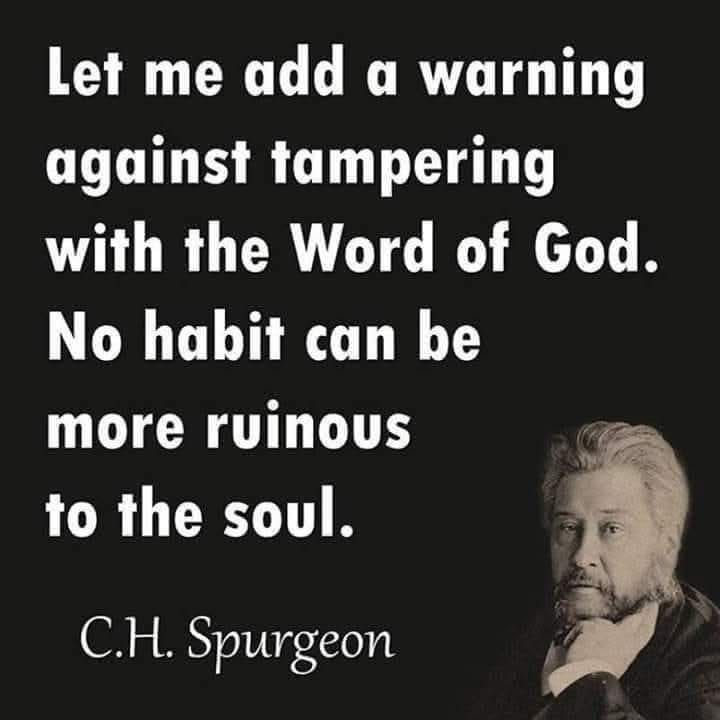
Charles Spurgeon says it well:
So let’s see how our passage today relates to other passages in the Bible. An exegesis of this passage in Isaiah would lead to many other passages decrying personal, imaginative interpretations of scripture (thanks to Precept Austin for the references):
“My people are destroyed for lack of knowledge.
Because you have rejected knowledge,
I also will reject you from being My priest.
Since you have forgotten the law of your God,
I also will forget your children.”
Hosea 4:6 NASB1995
“Now I urge you, brethren, keep your eye on those who cause dissensions and hindrances contrary to the teaching which you learned, and turn away from them. For such men are slaves, not of our Lord Christ but of their own appetites; and by their smooth and flattering speech they deceive the hearts of the unsuspecting.”
Romans 16:17-18 NASB1995
“But I am afraid that, as the serpent deceived Eve by his craftiness, your minds will be led astray from the simplicity and purity of devotion to Christ. For if one comes and preaches another Jesus whom we have not preached, or you receive a different spirit which you have not received, or a different gospel which you have not accepted, you bear this beautifully. For I consider myself not in the least inferior to the most eminent apostles. But even if I am unskilled in speech, yet I am not so in knowledge; in fact, in every way we have made this evident to you in all things.”
2 Corinthians 11:3-6 NASB1995
“These things I have written to you concerning those who are trying to deceive you. As for you, the anointing which you received from Him abides in you, and you have no need for anyone to teach you; but as His anointing teaches you about all things, and is true and is not a lie, and just as it has taught you, you abide in Him.”
1 John 2:26-27 NASB1995
We can ignore or laugh at politicians and their antics and understand that most of it is show, then vote for the less obvious liar I guess. However, we must be certain not to yield a good exegetical understanding of scripture to the cultural winds that are tossing us around like hurricanes. Compromising to keep others happy risks your eternal life! What is more important?
My next devotional examines Isaiah 9:18-21 - God’s anger with Israel Part 3 (selfishness).
Heaven on Wheels Daily Prayer:
Dear Lord - I learned two new terms today (eisegesis, exegesis) and I pray that my studies are aligned with an exegetical understanding of scripture and themes and scripture relationships in the Bible. Amen.
Citations and Credits:
Scripture quotations taken from the (NASB®) New American Standard Bible®, Copyright © 1960, 1971, 1977, 1995 by The Lockman Foundation. Used by permission. All rights reserved. www.Lockman.org.
Precept Austin was accessed on 10/17/2026 to review commentary for Isaiah 9:13-17.
Biblehub.org was accessed on 10/17/2026 to review commentary for Isaiah 9:13-17.
Gotquestions.org was accessed on 10/17/2026 to answer the question, What is Progressive Christianity, and is it biblical?
Gotquestions.org was accessed on 10/17/2026 to answer the question, What is the difference between exegesis and eisegesis?
© COPYRIGHT 2002-2026 GOT QUESTIONS MINISTRIES. ALL RIGHTS RESERVED.
Commentary from Enduring Word is used with written permission and without any alteration. ©1996-present The Enduring Word Bible Commentary by David Guzik – enduringword.com. At the link referenced, the bibliography used by David Guzik can be accessed.