


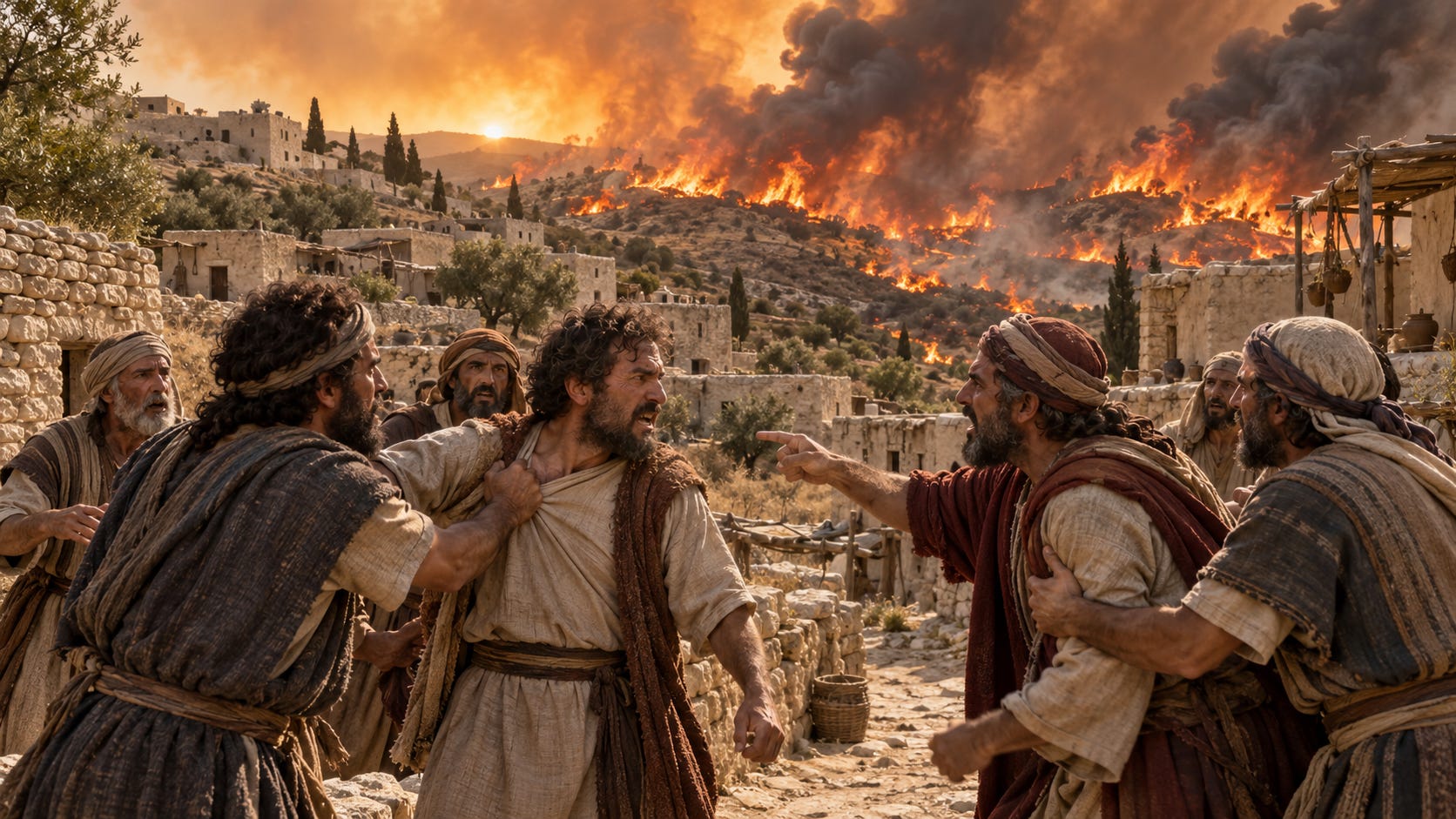
“For wickedness burns like a fire;
It consumes briars and thorns;
It even sets the thickets of the forest aflame
And they roll upward in a column of smoke.
By the fury of the Lord of hosts the land is burned up,
And the people are like fuel for the fire;
No man spares his brother.
They slice off what is on the right hand but still are hungry,
And they eat what is on the left hand but they are not satisfied;
Each of them eats the flesh of his own arm.
Manasseh devours Ephraim, and Ephraim Manasseh,
And together they are against Judah.
In spite of all this, His anger does not turn away
And His hand is still stretched out.”
Isaiah 9:18-21 NASB1995
This third stanza describing God’s anger with Israel is pretty disturbing. According to Precept Austin, this situation describes the sin of extreme selfishness, but it goes beyond that to a vision of a place where no man spares his brother because of the extreme wickedness in the land and the anger that springs from arrogance. The people are like fuel for a raging fire. I find it fascinating (but not a coincidence; God often points at scripture that mirrors the world) that this passage comes to the forefront in light of the extreme unrest and riots and looting and burning of public buildings in several countries in Europe (these protests started in Paris a few days ago).
Let’s look first at the fury of the Lord and how this contrasts with humans. This commentary is from Precept Austin:
ʿEbrāh (עֶבְרָה) — Wrath, Fury, Overflowing Anger - The Hebrew noun ʿebrāh (עֶבְרָה) refers to wrath, fury, or an outburst of intense anger, conveying the idea of anger that overflows beyond restraint. The word derives from the verb ʿābar (עָבַר), meaning “to pass over, overflow, or exceed.” This root suggests anger that passes its normal bounds, surging outward like a flood. Thus the term often describes anger in excess—rage that erupts violently or sweeps over others with destructive force. Because of this imagery, ʿebrāh can denote a powerful emotional outburst or fury that overwhelms restraint, emphasizing both the intensity and the overflowing nature of wrath.
In the Old Testament the word appears over thirty times and can describe either human anger or the wrath of God, though the nuance differs depending on the subject. When applied to human beings, ʿebrāh often portrays sinful, uncontrolled anger driven by pride or wounded arrogance. An early example occurs in Genesis 49:7, where Jacob condemns the violent fury of Simeon and Levi for their brutal revenge against Shechem. In this sense the word highlights cruel, merciless rage motivated by pride or insolence, a trait closely associated with arrogance (Prov. 21:24; Isa. 16:6). Human ʿebrāh therefore reflects a fault of character—anger that erupts destructively because it is rooted in pride and self-exaltation.
When the word is used of God, however, it carries a different emphasis. Rather than uncontrolled passion, it describes the fierce, overwhelming expression of divine justice against sin. God’s wrath is portrayed as burning, overflowing, and sweeping away wickedness, emphasizing its irresistible and comprehensive power (Ps. 78:49; Ezek. 22:21, 31). The prophets frequently associate this term with the Day of the LORD, the climactic time when God’s judgment pours out upon rebellion. That day is described as a “day of wrath” filled with destruction, darkness, and desolation (Zeph. 1:14–18; Isa. 13:9, 13). Wealth and human power cannot avert this judgment (Prov. 11:4; Ezek. 7:19), because it represents the righteous outpouring of God’s holiness against persistent sin. At times God even raises nations such as Assyria as instruments of His wrath (Isa. 10:6), demonstrating that divine fury can operate through historical events.
The word also appears in wisdom literature to illustrate moral consequences and royal authority. For example, Proverbs 14:35 contrasts the king’s favor toward a wise servant with his wrath against one who acts shamefully, reflecting the idea that legitimate authority may express just anger against wrongdoing. Yet even here the concept ultimately points beyond human authority to God’s greater judgment, reminding readers that righteousness—not riches—delivers in the “day of wrath” (Prov. 11:4).
In summary, ʿebrāh conveys the idea of overflowing, intense wrath that bursts beyond restraint. When describing human beings it usually depicts prideful, destructive rage, revealing the moral danger of anger rooted in arrogance. When used of God it emphasizes the fierce and overwhelming manifestation of His righteous judgment, particularly in connection with the Day of the LORD, when divine justice will overflow against all rebellion and bring wickedness to an end.
Two key takeaways:
Human fury is depicted as a prideful, destructive rage; the anger, which is morally dangerous, is rooted in arrogance.
God’s fury is a righteous judgment and in the Day of the Lord it will bring wickedness to an end.

Sadly, throughout our recent history here in this country we have had what you might describe as an epidemic of school or public area mass shootings. In spite of new gun laws overlapping old gun laws, these acts still happen on a regular basis (I happen to be an advocate of the Second Amendment and I know that these laws usually don’t work). In places where actual gun confiscation has occurred, the acts of extreme violence are committed with whatever is available (knives, machetes, explosives, airplanes, cars, rocks, etc.) I searched for “root causes” in an internet search for these acts and found many of the psychiatry sources to be woefully inadequate and incapable of recognizing the true sinful wickedness in human fury that is driven by prideful arrogance; they are too focused on the availability of tools rather than the behavior. It is also not a coincidence that many of the recent shooters suffer from gender dysphoria and are full of rage against those who may have tried to help them or perhaps even bullied them. Their egos will not concede that perhaps they are wrong, but so is the sinful society that pushes them to mutilate themselves.
This type of extreme selfishness creates behaviors that can jeopardize other people’s lives, even if there is no overt act of direct violence or it causes someone to casually put their own life on the line to accomplish a dangerous feat” regardless of the impact on friends and family. We watched a fascinating mountain climbing documentary Sunday night on Apple TV called “The Last First: Winter on K2”. K2 is the second-highest mountain in the world and is considered one of the most challenging climbs, even in the “good” climbing season. The documentary explores the tragedies that occurred in January 2021, when several groups tried for the first winter summit of K2 (all other peaks over 8,000 meters, including Everest, have been successfully climbed in winter conditions). This was considered the “last first” for extreme mountaineering.
One small group, led by a seasoned extreme mountaineer from Iceland and his climbing partner from Pakistan (and that climber’s son), tried to get there first. Unfortunately, a large group of commercial climbers, complete with camera crews and huge support staff, also showed up at base camp and so do some Sherpas, intent on doing it first for Nepal. Needless to say, there are betrayals between groups on a summit plan and also some ill-prepared climbers who demand shelter at the highest camp creating exhaustion for other climbers; the result is the death of several climbers, including (sadly), the climber from Iceland, who left behind a wife and six children, and his climbing partner from Pakistan. In a side concern, there was speculation that the Sherpas cut ropes that had placed near the summit, but this turned out to be a false rumor (that would have been a truly murderous act). The winter summit (the “last first”) was successfully completed by the group of Sherpa climbers, led by an egotistical Sherpa who held many records for fast consecutive summits and other feats. Ironically, this hotshot died earlier this year in an avalanche with several other climbers in Pakistan.

What struck me about the documentary is the “dog-eat-dog” mentality and soaring egos of so many these mountaineers. They were not satisfied with what they had already done, so they figuratively tried to do what is in this passage in Isaiah:
They slice off what is on the right hand but still are hungry,
And they eat what is on the left hand but they are not satisfied;
Each of them eats the flesh of his own arm.
The climber from Iceland was not satisfied with what he had already accomplished. He could not look at his children and be content, but he looked past them at another chance for “glory”. The Sherpa group wanted to gain glory for their country and their ethnic group, which had been on the sidelines for many years to western climbers even though they are among the best mountaineers. The commercial climbers spent a lot of bucks to be able to brag to their buddies that they had a “first”. I vaguely understand this human mentality, as most people are NOT content and want to do something profound in their lives. The glory of finding God is that we can be content to just be His and not get caught up in these furies and ego wars.
Believing in God relieves us of the need to prove ourselves to others. It shuts down that ego and the wrath that comes with arrogance. Improving ourselves for HIS sake is proof that we are redeemed by His blood.
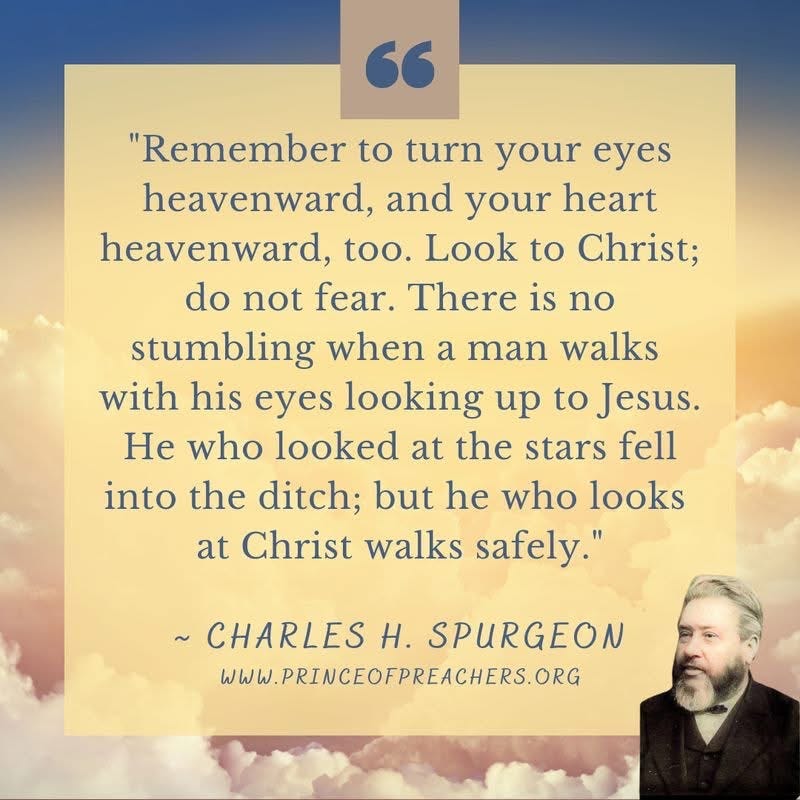
Turning back to that passage in Isaiah, we have to be aware that there may also be a literal reading of that passage (yikes!). Here is the commentary from Precept Austin:
Each of them eats the flesh of his own arm - Some interpret this figuratively, but there are other passages that suggest a literal reading, while unsavory, is not unreasonable. The Law had given stern, sobering warnings that conditions would be so bad that even such a barbaric act as cannibalism would be practiced.
Further, you shall eat the flesh of your sons and the flesh of your daughters you shall eat. (Lev 26:26)
Then you shall eat the offspring of your own body, the flesh of your sons and of your daughters whom the LORD your God has given you, during the siege and the distress by which your enemy shall oppress you.54 “The man who is refined and very delicate among you shall be hostile toward his brother and toward the wife he cherishes and toward the rest of his children who remain, 55 so that he will not give even one of them any of the flesh of his children which he shall eat, since he has nothing else left, during the siege and the distress by which your enemy shall oppress you in all your towns.56 “The refined and delicate woman among you, who would not venture to set the sole of her foot on the ground for delicateness and refinement, shall be hostile toward the husband she cherishes and toward her son and daughter, 57 and toward her afterbirth which issues from between her legs and toward her children whom she bears; for she shall eat them secretly for lack of anything else, during the siege and the distress by which your enemy shall oppress you in your towns. (Dt 28:55-57)
Comment: OT prophetic warnings in the Law of Moses were literally fulfilled in a later siege of Jerusalem by the Romans in 70AD. Josephus gives a dreadful detail respecting a woman named Mary, who, in the extremity of the famine, during the siege, killed her sucking child, roasted, and had eaten part of it, when discovered by the soldiers!
And the king said to her, “What is the matter with you?” And she answered, “This woman said to me, ‘Give your son that we may eat him today, and we will eat my son tomorrow.’ “So we boiled my son and ate him; and I said to her on the next day, ‘Give your son, that we may eat him’; but she has hidden her son.” (2Ki 6:28, 29, cp Jer 19:9, Lam 2:20, 4:10 Ezek 5:10 - [Jeremiah, Lamentations and Ezekiel refer to the Babylonian siege of Jerusalem in the years preceding 586BC).
Well, that’s certainly unpleasant.
The final verses in Isaiah 9 (and the end of this third stanza) talk about the dissolution of Israel and Judah. Manasseh “eats” Ephraim (and vice versa) and together they are against Judah. John Oswalt, a Wesleyan professor of the Old Testament, made this observation, as quoted in Precept Austin:
The particularly devouring power of sin is seen in its capacity to destroy human relations. These connections, upon which humanity is most deeply dependent, cannot survive the fire of self-serving. It is sad when the environment is abused through sin; it is tragic when human relationships are destroyed. Yet, that had been the history of Israel up to and including Isaiah’s own day. (The Book of Isaiah, Chapters 1–39)
If you are a believer, you must hate sin more and more every day, especially the sin of pride. It destroys everything it touches. The self-serving egos of the leadership of Japan and Germany before WWII led to the raging fires of that war, the deaths of 60-70 million people and the widespread destruction of many places across the world.
My next devotional examines Isaiah 10:1-4 - The fourth stanza of this poem, the spread of injustice.
Heaven on Wheels Daily Prayer:
Dear Lord - Please guide me to move away from all sins, especially the sins that are driven by prideful arrogance. May my improvements and accomplishments only come through the Holy Spirit. Amen.
Citations and Credits:
Scripture quotations taken from the (NASB®) New American Standard Bible®, Copyright © 1960, 1971, 1977, 1995 by The Lockman Foundation. Used by permission. All rights reserved. www.Lockman.org.
Precept Austin was accessed on 10/19/2026 to review commentary for Isaiah 9:18-21.
Biblehub.org was accessed on 10/19/2026 to review commentary for Isaiah 9:18-21.