


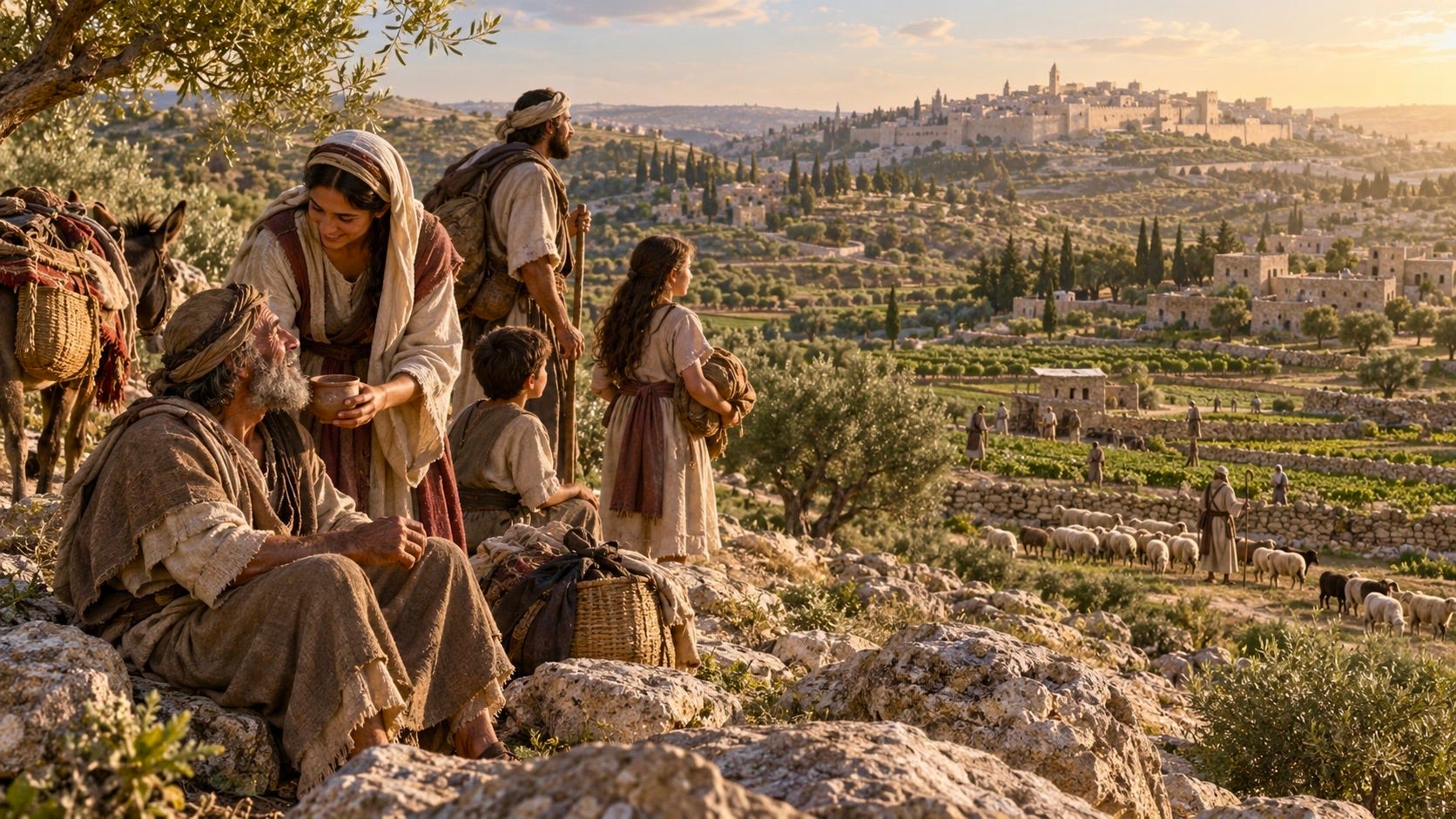
Image generated by ChatGPT (OpenAI) using the DALL·E model.
“This is what the LORD Almighty, the God of Israel, says: “When I bring them back from captivity, the people in the land of Judah and in its towns will once again use these words: ‘The LORD bless you, you prosperous city, you sacred mountain.’ People will live together in Judah and all its towns—farmers and those who move about with their flocks. I will refresh the weary and satisfy the faint.””
Jeremiah 31:23-25 NIV
While Barb makes her way through the prophecies of Isaiah, God has pointed me to another of the major prophets — Jeremiah. This prophet began his ministry in 626 BC, and continued his work until about 587 BC. The peoples of Israel and Judah are in exile in Babylon as Jeremiah transcribes the words of God speaking through him, and these verses would have been seen as comforting to those in exile.
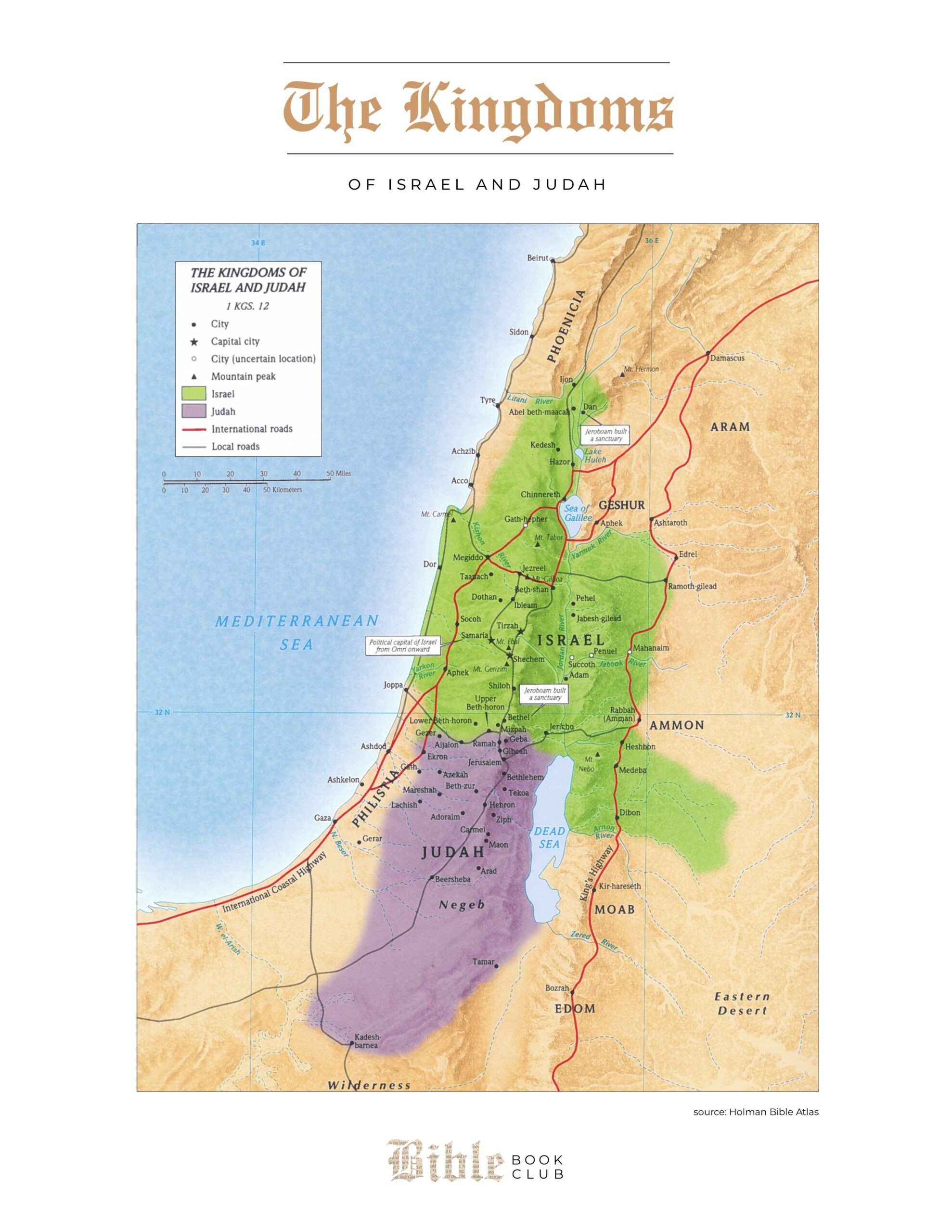
Time for a geography lesson! As you can see in the map below (from the Holman Bible Atlas via the Bible Book Club Podcast), Israel was the northern kingdom, while Judah was to the south. It was centered politically around Jerusalem, in an area that is quite hilly and that had many fortresses at the time.

These verses of hope begin with the words (from Jeremiah 31:23) :
“This is what the LORD Almighty, the God of Israel, says: “When I bring them back from captivity, the people in the land of Judah and in its towns will once again use these words: ‘The LORD bless you, you prosperous city, you sacred mountain.’”
God, speaking through Jeremiah, is emphasizing that the spiritual foundation of the nation — Jerusalem, in Judah — would be restored, and His presence would bless the people. To those in exile, these would certainly be comforting words, as the captivity in Babylon would not be the end. The Lord had plans to restore His people and revitalize the cities that were in ruins.
It’s a vision of God’s ability to heal — He is not only going to make good on repairing the physical destruction of the nation, but return the people to spiritual health. This is still true in our New Testament times, with Jesus offering healing of broken lives as seen in John 10:10:
“The thief comes only to steal and kill and destroy; I have come that they may have life, and have it to the full.”
God’s plan is to rebuild cities and lives, blessing the people in response to their honest repentance and trust in His grace and mercy. In verse 24, God continues with the good news:
People will live together in Judah and all its towns—farmers and those who move about with their flocks.
It’s a prophecy of everyday life returning to Judah, with no threats from foreign armies and no internal bickering in the nation. When the people of Judah are released from their captivity and return to their homeland, God will bless them with security in the farm fields and on the hillsides with the flocks, as well as in cities that are safe and prosperous. Having this peace and stability is a sign that the Lord is planning to keep His people safe in the future, free from oppression from outsiders or the need to unwillingly travel to foreign lands. They’ll be able to both live and worship in unity.
When I read these verses from Jeremiah, I was reminded of Europe in the years after World War II. Many cities were devastated, and millions of people had experienced exile, war, and were scattered over the continent far from their homelands. Like the people of Judah, many Europeans had weary hearts after the years of conflict. Yet believers could take heart in God’s promise as found in the last verse — “I will refresh the weary and satisfy the faint.”
Even in the devastation of a war-torn continent and for those who had been unwillingly exiled from their homes, God’s promise is to do much more than just let His people survive — He pledges to fill their deepest spiritual needs. By refreshing the weary, we see God’s compassion at work. In New Testament times, this promise is fulfilled by Jesus, who said “Come to me, all you who are weary and burdened, and I will give you rest” (Matthew 11:28).
For all who suffer — whether we look to the past to the remnant of Judah, to the recent past in the millions who barely survived World War II, or to those at present who live under oppressive regimes — God’s Word as capture for eternity by the prophet Jeremiah is a promise that suffering will pass, replaced with fulfillment of physical and spiritual needs through His grace and mercy.
Jeremiah’s prophecy is filled with hope of hearts replenished by the One God who always sustains His people.
Heaven On Wheels Daily Prayer:
Heavenly Father, I thank You for Your promises of restoration and joy. I acknowledge that I often feel weary of this sinful world and the burdens it presents, but trust that You will refresh my spirit and fill my heart with Your peace. AMEN.
Amen