


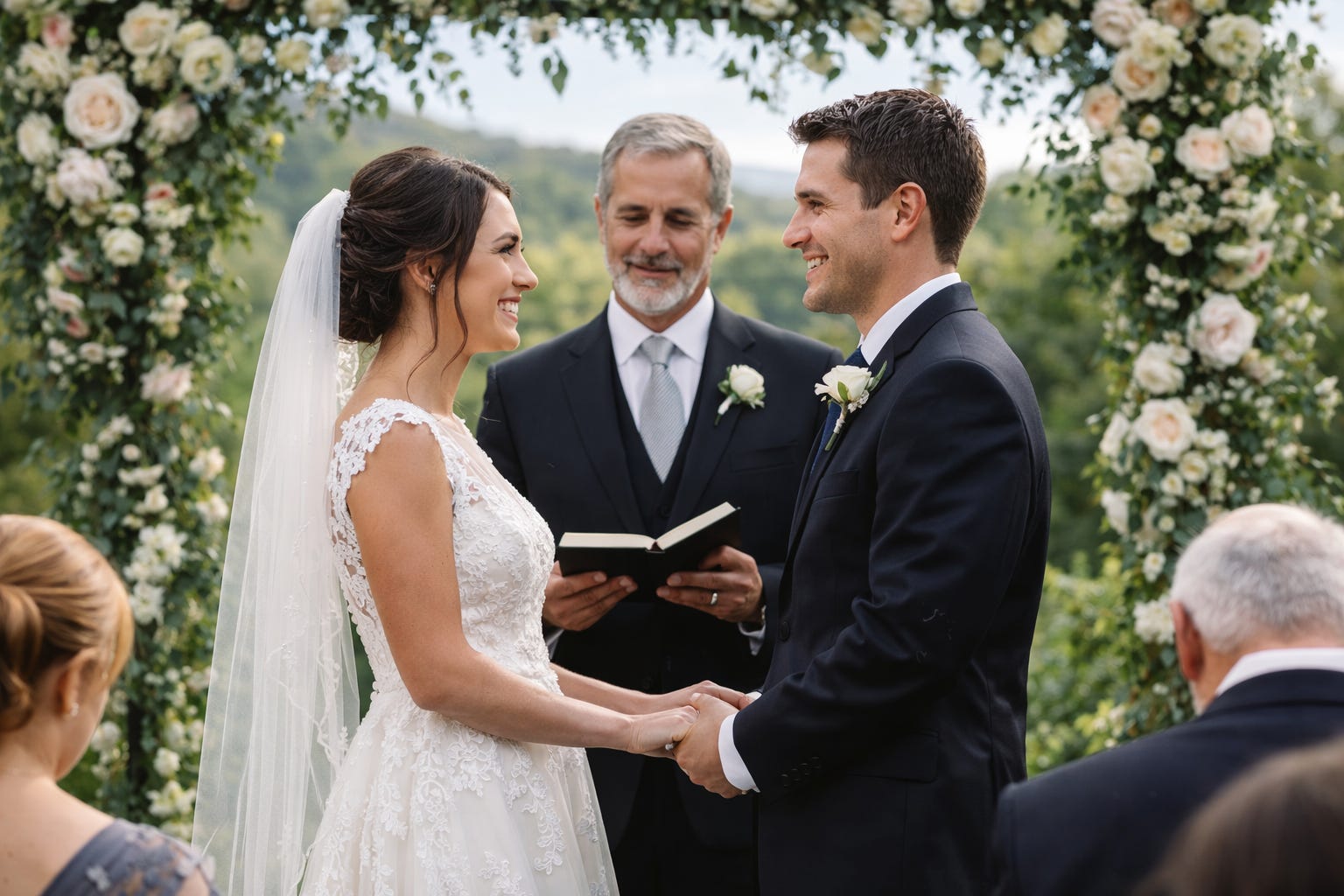
“Marriage is to be held in honor among all, and the marriage bed is to be undefiled; for fornicators and adulterers God will judge.”
Hebrews 13:4 NASB1995
After telling the believers to love their brethren, care for strangers and care for those in prison, the author of Hebrews admonishes them to hold marriage in honor among them all. This is one of many, many places in the Bible that address traditional marriage and the behavior of people (a man and a woman) that contemplate marriage.
I found an interesting list of many Bible references to marriage on Precept Austin from Torrey’s Topical (a compendium of Biblical references):
This would make a great Sunday School series or Sermon series -- simply walking through the Scriptures and allowing God to say what He says about the honorable institution of marriage. Is there a desperate need? Did the sun rise this morning! The post-Christian society in American is rapidly and radically jettisoning all Biblical truth related to the divine institution of marriage and in so doing is removing one of the foundational pillars of our society. It is time for the Church of Jesus Christ to take a radical stand for righteousness and holiness!
1. Divinely instituted. Ge 2:24.
2. A covenant relationship. Mal 2:4.
3. Designed for
a. The happiness of man. Ge 2:18.
b. Increasing the human population. Ge 1:28; 9:1.
c. Raising up godly seed. Mal 2:15.
d. Preventing fornication. 1Co 7:2.4. The expectation of the promised seed of the woman an incentive to [marry] in the early age. Ge 3:15; 4:1.
5. Lawful in all. 1Co 7:2,28; 1Ti 5:14.
6. Honorable for all. Heb 13:4.
7. Should be only in the Lord. 1Co 7:39.
8. Expressed by
a. Joining together. Mt 19:6.
b. Making affinity. 1Ki 3:1.
c. Taking to wife. Ex 2:1.
d. Giving daughters to sons, and sons to daughters. Deut 7:3; Ezr 9:12.9. Indissoluble during the joint lives of the parties. Mt 19:6; Ro 7:2,3; 1Co 7:39.
10. Early introduction of polygamy. Ge 4:19.
11. Contracted in patriarchal age with near relations. Ge 20:12; 24:24; 28:2.
12. Often contracted by parents for children. Ge 24:49-51; 34:6,8.
13. Should be with consent of parents. Ge 28:8; Jdg14:2,3.
14. Consent of the parties necessary to. Ge 24:57,58; 1Sa 18:20; 25:41.
15. Parents might refuse to give their children in. Ex 22:17; Deut 7:3.
16. The Jews
a. Forbidden to contract with their near relations. Le 18:6.
b. Forbidden to contract with idolaters. Deut 7:3,4; Jos 23:12; Ezr 9:11,12.
c. Often contracted with foreigners. 1Ki 11:1; Ne 13:23.
d. Sometimes guilty of polygamy. 1Ki 11:1,3.
e. Careful in contracting for their children. Ge 24:2,3; 28:1,2.
f. Betrothed themselves some time before. Deut 20:7; Jdg14:5,7,8; Mt 1:18.
g. Contracted when young. Pr 2:17; Joe 1:8.
h. Often contracted, in their own tribe. Ex 2:1; Nu 36:6-13; Lk 1:5,27.
i. Obliged to contract with a brother’s wife who died without seed. Deut 25:5; Mt 22:24.
j. Considered being debarred from a reproach. Is 4:1.
k. Considered being debarred from a cause of grief. Jdg 11:38.
l. Often punished by being debarred from. Jer 7:34; 16:9; 25:10.
m. Were allowed divorce from, because of hardness of their hearts. Deut 24:1; Mt 19:7,8.
n. Exempted from going to war immediately after. Deut 20:717. Priest not to contract, with divorced or improper persons. Le 21:7.
18. The high priest not to contract, with a widow or a divorced or profane person. Le 21:14.
19. Contracted at the gate and before witnesses. Ru 4:1,10,11.
20. Modes of demanding women in. Ge 24:3,4; 34:6,8; 1Sa 25:39,40.
21. Elder daughters usually given in, before the younger. Ge 29:26.
22. A dowry given to the woman’s parents before. Ge 29:18; 34:12; 1Sa 18:27,28; Ho 3:2.
23. Celebrated
a. With great rejoicing. Jer 33:11; Jn 3:29.
b. With feasting. Ge 29:22; Jdg 14:10; Mt 22:2,3; Jn 2:1-10.
c. For seven days. Jdg 14:12.24. A benediction pronounced after. Ge 24:60; Ru 4:11,12.
25. The bride
a. Received presents before. Ge 24:53.
b. Given a handmaid at. Ge 24:59; 29:24,29.
c. Adorned with jewels for. Is 49:18; 61:10.
d. Gorgeously apparelled. Ps 45:13,14.
e. Attended by bridesmaids. Ps 45:9.
f. Stood on the right of bridegroom. Ps 45:9.
g. Called to forget her father’s house. Ps 45:10.26. The bridegroom
a. Adorned with ornaments. Is 61:10.
b. Attended by many friends. Jdg 14:11; Jn 3:29.
c. Presented with gifts. Ps 45:12.
d. Crowned with garlands. Song 3:11.
e. Rejoiced over the bride. Is 62:5.
f. Returned with the bride to his house at night. Mt 25:1-6.27. Garments provided for guests at. Mt 22:12.
28. Infidelity of those contracted in, punished as if married. Deut 22:23,24; Mt 1:19.
29. Illustrative of
The original intent by God of a union between a man and a woman as described in Genesis 2 rapidly became a situation that somehow allowed for polygamy and other human “adjustments”, as seen in the examples of Jacob, David and Solomon and mentioned in the list above showing polygamy appearing early in the book of Genesis. This does not mean that God approved of polygamy. Here’s a great answer to that question from Gotquestions.org:
1) Why did God allow polygamy in the Old Testament? The Bible does not specifically say why God allowed polygamy, and we must remember that allowance is not the same as approval. As we speculate about God’s permissive silence, there is at least one key factor to consider. In patriarchal societies, it was nearly impossible for an unmarried woman to provide for herself. Women were often uneducated and untrained. Women relied on their fathers, brothers, and husbands for provision and protection. Unmarried women were often subjected to prostitution and slavery.
So, God may have allowed polygamy to protect and provide for the women who otherwise may have been left destitute. A man would take multiple wives and serve as the provider and protector of all of them. While definitely not ideal, living in a polygamist household was far better than the alternative of prostitution, slavery, or starvation. In addition to the protection/provision factor, polygamy enabled a much faster expansion of humanity, fulfilling God’s command to “be fruitful and increase in number; multiply on the earth” (Genesis 9:7).
2) How does God view polygamy today? Even while recording cases of polygamy, the Bible presents monogamy as the plan that conforms most closely to God’s ideal for marriage. The Bible says that God’s original intention was for one man to be married to only one woman: “For this reason a man will leave his father and mother and be united to his wife [not wives], and they will become one flesh [not fleshes]” (Genesis 2:24). The consistent use of the singular in this verse should be noted. Later, in Deuteronomy 17:14–20, God says that the kings were not to multiply wives (or horses or gold). While this cannot be interpreted as a command that kings must be monogamous, it does indicate that having multiple wives causes problems. Such problems can be clearly seen in the life of Solomon (1 Kings 11:3–4).
In the New Testament, 1 Timothy 3:2, 12 and Titus 1:6 list being “the husband of one wife” as a qualification for spiritual leadership in the church. The phrase could literally be translated “a one-woman man.” However broadly or narrowly that qualification should be applied, in no sense can a polygamist be considered a “one-woman man.” Is the prohibition of polygamy only for elders and deacons, the “example-setters”? No, the standard of monogamy should apply to all Christians.
Ephesians 5:22–33 speaks of the relationship between husbands and wives. When referring to a husband (singular), the passage always also refers to a wife (singular). “For the husband is the head of the wife [singular]. . . . He who loves his wife [singular] loves himself. For this reason a man will leave his father and mother and be united to his wife [singular], and the two will become one flesh. . . . Each one of you also must love his wife [singular] as he loves himself, and the wife [singular] must respect her husband [singular].” Further, if polygamy were allowable, the illustration of Christ’s relationship with His Body (the Church) falls apart (Ephesians 5:32). In Colossians 3:18–19, Paul refers to husbands and wives in the plural, but in that passage it is clear that he is addressing all the husbands and wives among the Colossian believers.
3) Why did it change? It is not so much that God disallowed something He had previously allowed as it is that God restored marriage to His original plan. As seen in Genesis 2, polygamy was not God’s original intent. God seems to have allowed polygamy to solve a problem, but that solution was not the ideal. In most modern societies, there is absolutely no need for polygamy. In most cultures today, women are able to provide for and protect themselves—removing the only “positive” aspect of polygamy. Further, most modern nations outlaw polygamy. According to Romans 13:1–7, we are to obey the laws the government establishes, including laws prohibiting polygamy.
Are there some instances in which the allowance for polygamy would still apply today? Perhaps, but it is unfathomable that there would be no other solution. Due to the “one flesh” aspect of marriage, the need for oneness and harmony in marriage, and the lack of any real need for polygamy, it is our firm belief that polygamy does not honor God and is not His design for marriage.
Now that we answered that question, and I think the answer is a good one, noting that polygamy wasn’t God’s plan but it was a way to protect women in those times from worse situations. The questions of same-sex marriage, marriages between transgenders or society-approved cohabitation before (or instead of) marriage were likely beyond the imaginations of the people in the Bible at the time of Hebrews. But these still go against God’s plan for marriage.

By the time of Hebrews, the teachings Jesus had made it clear that marriage was between one man and one woman and that adultery and fornication were not acceptable. First, from Matthew:
“When Jesus had finished these words, He departed from Galilee and came into the region of Judea beyond the Jordan; and large crowds followed Him, and He healed them there. Some Pharisees came to Jesus, testing Him and asking, “Is it lawful for a man to divorce his wife for any reason at all?” And He answered and said, “Have you not read that He who created them from the beginning made them male and female, and said, ‘For this reason a man shall leave his father and mother and be joined to his wife, and the two shall become one flesh’? So they are no longer two, but one flesh. What therefore God has joined together, let no man separate.”
They *said to Him, “Why then did Moses command to give her a certificate of divorce and send her away?” He *said to them, “Because of your hardness of heart Moses permitted you to divorce your wives; but from the beginning it has not been this way. And I say to you, whoever divorces his wife, except for immorality, and marries another woman commits adultery.” The disciples *said to Him, “If the relationship of the man with his wife is like this, it is better not to marry.” But He said to them, “Not all men can accept this statement, but only those to whom it has been given. For there are eunuchs who were born that way from their mother’s womb; and there are eunuchs who were made eunuchs by men; and there are also eunuchs who made themselves eunuchs for the sake of the kingdom of heaven. He who is able to accept this, let him accept it.””
Matthew 19:1-12 NASB1995
The use of the word “eunuch” is interesting in this passage. Here is the word usage from the Blue Letter Bible lexicon:
The Greek noun εὐνοῦχος or eunoûchos (Strong’s G2135) has the following Biblical usages:
a bed keeper, bed guard, superintendent of the bedchamber, chamberlain
in the palace of oriental monarchs who support numerous wives the superintendent of the women’s apartment or harem, an office held by eunuchs
an emasculated man, a eunuch
eunuchs in oriental courts held by other offices of greater, held by the Ethiopian eunuch mentioned in Ac. 8:27-39.
one naturally incapacitated
for marriage
begetting children
one who voluntarily abstains from marriage
Men who voluntarily abstain from marriage or are incapacitated to fulfill a marriage as defined by God fit into these definitions.
And from Matthew 5:
““You have heard that it was said, ‘You shall not commit adultery’; but I say to you that everyone who looks at a woman with lust for her has already committed adultery with her in his heart. If your right eye makes you stumble, tear it out and throw it from you; for it is better for you to lose one of the parts of your body, than for your whole body to be thrown into hell. If your right hand makes you stumble, cut it off and throw it from you; for it is better for you to lose one of the parts of your body, than for your whole body to go into hell.
“It was said, ‘Whoever sends his wife away, let him give her a certificate of divorce’; but I say to you that everyone who divorces his wife, except for the reason of unchastity, makes her commit adultery; and whoever marries a divorced woman commits adultery.”
Matthew 5:27-32 NASB1995
Well, that’s pretty clear from the Lord Himself. Too many people are unable to overcome challenges in their marriages in this present time and so they divorce for “unreconcilable reasons”. In fact, the reasons for a divorce are not even required in many states due to “no fault” divorce laws. I’m merely stating facts, not judging the qualities of marriages, but the words of Jesus do give one pause. In fact, Biblically speaking, Steve and I did not fulfill our requirements for marriage because we decided not to have children. I have prayed for forgiveness for this deep regret and sin. My career wasn’t worth it.
I know this is a “controversial” topic, considering that many mainstream churches today have stretched the definition of marriage far beyond its original intentions in an attempt to be “loving” (encouraging sin is not loving). Just because the Supreme Court of the United States “approves” of something doesn’t mean that God approves. And in my opinion, children deserve a father and a mother, not two people masquerading in those roles and using surrogates to provide children.
Easy access to pornography has also made adultery, as defined by Jesus, very prominent and has been a major factor in failing marriages. Marriages have also become just fancy secular parties, with couples trying to outdo each other on scenic locations, gourmet dinners and massive receptions, and wild parties for both sides before the wedding happens (go to Nashville or Las Vegas if you get a chance and see the bridesmaids parties that are jumping from one honky tonk or bar to the next).

One more commentary, this one from Enduring Word:
a. Marriage is honorable among all: The Bible holds high the ideal of married life and the institution of family.
i. This is difficult to speak about today, because many who aren’t married feel put off by an emphasis on marriage and family in the church.
ii. This is difficult to speak about today, because this (marriage is honorable among all) is becoming less and less true in the society as a whole.
· Marriage is dishonored by divorce, justified or not.
· Marriage is dishonored by living together outside of marriage.
· Marriage is dishonored by adultery.
· Marriage is dishonored by neglect.
· Marriage is dishonored by re-definition.
b. Marriage is honorable among all, and the bed undefiled: This is another place where the Bible celebrates sex as an expression of married love. This is the consistent teaching of the Bible, in such places as The Song of Solomon.
i. The Bible speaks powerfully about the purpose of sex.
· Not just for reproduction, though that is an aspect.
· Not just for pleasure, though that is an aspect.
· The main purpose is to bond together a one-flesh relationship. This is what gives sex meaning, beyond a pleasurable experience; this is what God offers in sexual expression according to His will, what the world can’t offer or match.
ii. With this perspective, we see why God commands what He does in regard to sex and why God says, and the bed undefiled. It also explains why the enemy of our souls wants to do everything he can to encourage sex outside of the marriage bed and he wants to do everything he can to discourage sex inside the marriage bed. Christians must recognize this strategy and not give it a foothold.
iii. Though God allows great freedom in the variety of sexual expression in marriage, all must be done with a concern for the needs of their spouse and in love (1 Corinthians 7:2-5 and Ephesians 5:21-33).
c. But fornicators and adulterers God will judge: As the Bible celebrates sexual expression in marriage, it also condemns sex outside of the marriage commitment. God does this because fornication and adultery work against God’s greatest purpose for sex (though they may fulfill the pleasure purpose).
· In this context, fornicators refers to those who have sex without the commitment of marriage.
· In this context, adulterers refers to those who are not fa to their marriage vows and have sex outside of their marriage vows.
i. “Fornication and adultery are not synonymous in the New Testament: adultery implies unfaithfulness by either party to the marriage vow, while the word translated ‘fornication’ covers a wide range of sexual irregularities.” (Bruce)
So even back in the days of the book of Hebrews, there was danger and the enemy lurking around the holy relationship between a married man and woman, since the author felt it was necessary to include this exhortation.
My next devotional examines Hebrews 13:5-6 - Be content, God is with you.
Heaven on Wheels Daily Prayer:
Dear Lord - I now understand the purposes that You made for marriage between men and women and ask Your forgiveness for not fulfilling my marriage vows but putting my career first. Amen.
Credits and Citations:
Scripture quotations taken from the (NASB®) New American Standard Bible®, Copyright © 1960, 1971, 1977, 1995 by The Lockman Foundation. Used by permission. All rights reserved. www.Lockman.org.
Precept Austin was accessed on 02/25/2026 to review commentary for Hebrews 13:4.
“G2135 - eunouchos - Strong’s Greek Lexicon (NASB95).” Blue Letter Bible. Web. 25 Feb, 2026. <https://www.blueletterbible.org/lexicon/g2135/nasb95/mgnt/0-1/>.
Gotquestions.org was accessed on 02/25/2026 to answer the question, Why did God allow polygamy / bigamy in the Bible? © COPYRIGHT 2002-2026 GOT QUESTIONS MINISTRIES. ALL RIGHTS RESERVED
Commentary from Enduring Word is used with written permission and without any alteration. ©1996-present The Enduring Word Bible Commentary by David Guzik – enduringword.com. Within the Enduring Word commentary:
Bruce, F.F. The Epistle to the Hebrews(Grand Rapids, Michigan: Eerdmans Publishing Company, 1964)