


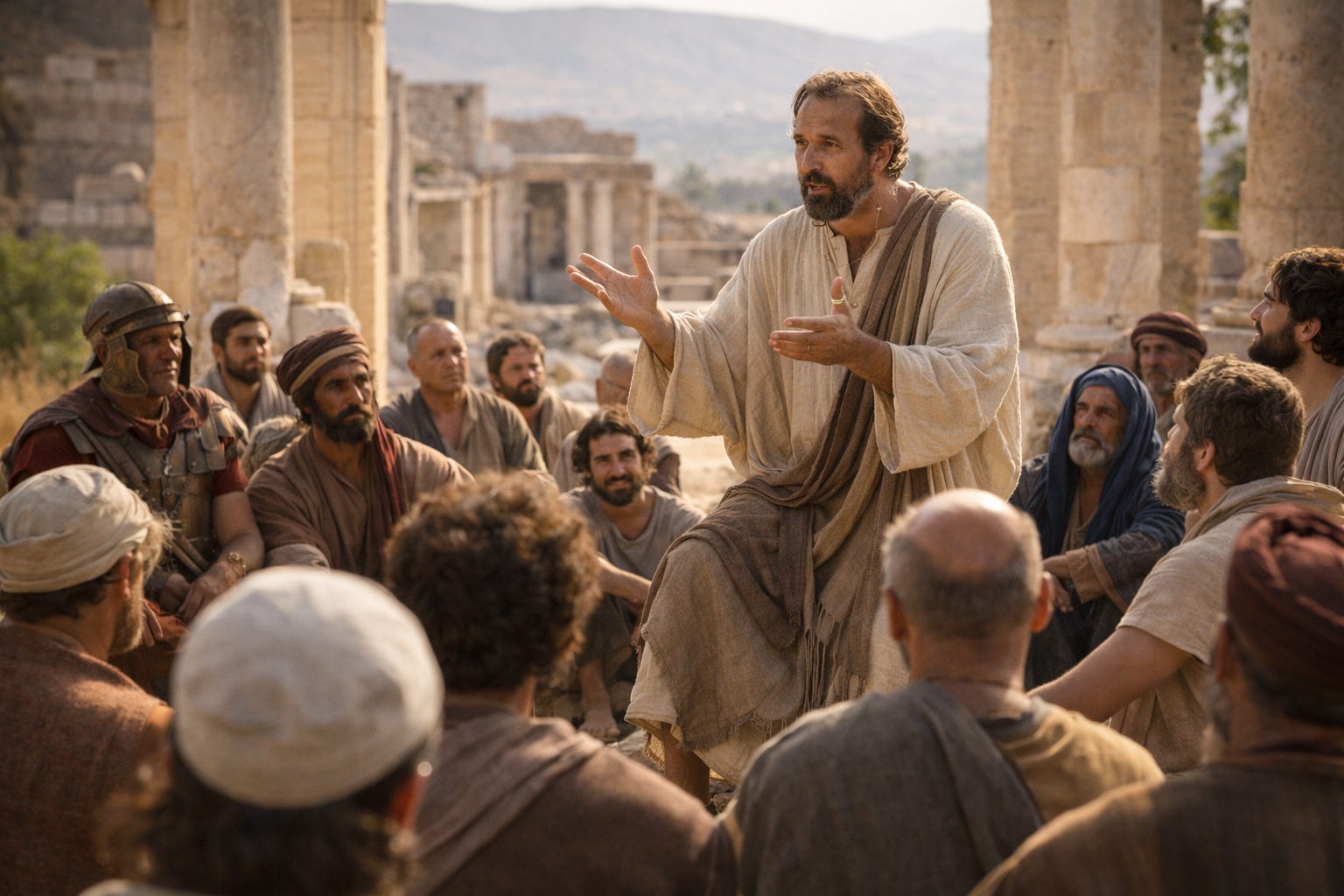
“To me, the very least of all saints, this grace was given, to preach to the Gentiles the unfathomable riches of Christ, and to bring to light what is the administration of the mystery which for ages has been hidden in God who created all things; so that the manifold wisdom of God might now be made known through the church to the rulers and the authorities in the heavenly places.”
Ephesians 3:8-10 NASB1995
Paul describes himself as the very least of all saints, yet he was given grace from our Lord to preach to the Gentiles the unfathomable riches of Christ. That is a fascinating word, unfathomable, so let’s do a word study from the Blue Letter Bible lexicon:
Unfathomable comes from the Greek adjective ἀνεξιχνίαστος or anexichníastos (Strong’s G421), with the following Biblical usage:
that cannot be searched out, that cannot be comprehended
This word is also translated as “unsearchable”. We cannot fully comprehend the scope of the cosmos nor the depths of the ocean or even the deep thoughts that another person might be having. The riches of Christ are even beyond these physical boundaries. This explanation from Gotquestions.org is quite good:
The Greek word translated “unsearchable” describes something that cannot be fully comprehended or explored. In other words, there is no limit to the riches of Christ; they are past finding out. Try as we might, we can never plumb the depths of Christ’s worth. Paul delineates some of these riches in Ephesians 1:7–14: redemption through His blood, the forgiveness of sins, the knowledge of the mystery of His will, the message of truth, the sealing of the Holy Spirit, and the guarantee of our inheritance. These are spiritual riches with eternal benefits, and we cannot fully comprehend them.
Jesus taught two short parables that emphasize the value of eternal life and the kingdom of God: “The kingdom of heaven is like treasure hidden in a field. When a man found it, he hid it again, and then in his joy went and sold all he had and bought that field. Again, the kingdom of heaven is like a merchant looking for fine pearls. When he found one of great value, he went away and sold everything he had and bought it” (Matthew 13:44–46). Like a hidden treasure or a pearl of great price, admission to the kingdom is of incalculable worth—and it is Jesus Christ who grants the admission. The unsearchable riches of Christ are on display in every believer’s heart.
The unsearchable riches of Christ cannot be fully traced out. “In Christ all the fullness of the Deity lives in bodily form” (Colossians 2:9), so the riches of Christ include all that God is. The unsearchable riches of Christ are the Glory of God, the Truth of God, the Wisdom of God, the Life of God, and the Love of God. In Christ, God “has blessed us in the heavenly realms with every spiritual blessing” (Ephesians 1:3). In Christ are hidden “all the treasures of wisdom and knowledge” (Colossians 2:3). In Christ, God “has given us everything we need for a godly life” (2 Peter 1:3).
In Ephesians 3:8 Paul refers to himself as “less than the least of all the Lord’s people.” This humble statement is then contrasted with “the boundless riches of Christ.” Paul describes himself as the lowest of believers while lifting Jesus up as the greatest of all. Every believer, in like humility, acknowledges the all-surpassing goodness and grace of God: “The LORD bestows favor and honor; no good thing does he withhold from those whose walk is blameless” (Psalm 84:11).Christ’s riches that He makes available to us are not material but spiritual. The unsearchable riches of Christ provide salvation to everyone who believes (John 3:16; Romans 1:16). We may be the worst of sinners, yet Jesus can forgive us and transform our lives (Romans 12:1–2). It is the gift that truly keeps on giving, as we are changed, by God’s Spirit, into “loving, happy, peaceful, patient, kind, good, faithful, gentle, and self-controlled” people (Galatians 5:22–23, CEV).
Precept Austin also has a useful list of the unfathomable riches of Christ:
The unsearchable riches of Christ!
There is everything in Christ to encourage the greatest sinners to believe on Him, to rest and lean upon Him for all happiness and blessedness. Christ is …
the greatest good,
the choicest good,
the chief good,
the most suitable good,
the most necessary good;
a pure good,
a real good,
a total good,
an eternal good,
a soul-satisfying good!
Sinners, are you poor? Christ has gold to enrich you.
Are you naked? Christ has royal robes, and white clothing to clothe you.
Are you blind? Christ has eye-salve to enlighten you.
Are you hungry? Christ will be manna to feed you.
Are you thirsty? He will be a well of living water to refresh you.
Are you wounded? He has a balm under his wings to heal you.
Are you sick? He is a physician to cure you.
Are you prisoners? He has laid down a ransom for you.
Treasures on Earth do not satisfy; only these spiritual goods are eternal.

Paul is administrating and bringing to light the mystery, which was for ages hidden in the God who created all things, so that the manifold wisdom of God might be made known through the church to the rulers and authorities in the heavenly places. This is a lot to absorb and try to understand; people rushing to get through these verses in an attempt to read “the Bible in One Year” probably miss the complexity of what is being said. Enduring Word has a decent commentary:
a. That now the manifold wisdom of God might be made known: God is a being of infinite wisdom and glory, and He wants His creatures to know His great and manifold wisdom. One purpose in His great plan of the ages is to reveal this wisdom.
i. Understanding the character of God, we can say that this is not for a selfish or self-glorying motive, in the way we think of the proud man showing his brains and accomplishments to everyone. God does this for the glory of His creatures, because the glory of the creature is directly connected to the glory of the Creator.
ii. This wisdom is manifold. The ancient Greek word polupoikilos has the ideas of intricacy, complexity, and great beauty. “That hath abundance of curious variety in it, such as is seen in the best pictures or textures.” (Trapp)
iii. It also must be made known. Dean Alford points out that the words might be made known are emphatic, strongly contrasting the idea of hidden in Ephesians 3:9.
b. Might be made known by the church to the principalities and powers: This explains how God will reveal His wisdom, and to whom He reveals it. He will reveal it by His work in the church, and He will reveal it to angelic beings (principalities and powers).
i. Of course, God also wants to reveal this wisdom to the church. Yet in the big picture, God doesn’t use the angels to reveal His wisdom to the saints, but He does use the saints to reveal His wisdom to the angelic beings, both faithful and fallen angels. This reminds us that we are called for something far greater than our own individual salvation and sanctification. We are called to be the means by which God teaches the universe a lesson, and a beautiful lesson.
ii. We are surrounded by invisible spiritual beings, and they intently look upon us. Here, Paul draws back the invisible curtain that hides these beings just as Elisha prayed at Dothan, LORD, I pray, open his eyes that he may see (2 Kings 6:17). These angelic beings see us perfectly and know us far better than we know them.
iii. “What then have they to learn from us? Ah, they have to learn something which makes them watch us with wonder and with awe. They see in us indeed all our weakness, and all our sin. But they see a nature which, wrecked by itself, was yet made in the image of their God and ours. And they see this God at work upon that wreck to produce results not only wonderful in themselves but doubly wonderful because of the conditions.” (Moule)
iv. “In his immortality, never touched by one drop of our cold river, it is instructive to him beyond all our thought to see his God triumphing over pain and death in some sufferer in the fire of martyrdom, or in the torture of cancer, or in the shipwreck, or just in the silent awe of any form of our departure from the body… They see these fallen and mortal beings, this Community of the lost and saved, not only bearing and doing for God here on earth, but spiritually present with Him in the Holy of Holies above.” (Moule)
v. Sometimes Christians get the crazy idea that God saved them and works in their life because they are somehow such great people. The angels see right through this. We might believe that it is because of us; the angels know better. We may think our lives are small and insignificant; the angels know better. We may doubt our high standing, seating in heavenly places; the angels see this spiritual reality with eyes wide open.
vi. “It is as if a great drama is being enacted. History is the theatre, the world is the stage, and the church members in every land are the actors. God himself has written the play, and he directs and produces it. Act by act, scene by scene, the story continues to unfold. But who are the audience? They are the cosmic intelligences, the principalities and powers in the heavenly places.” (Stott)
vii. “The Angels are instructed in God’s wisdom… by the fact of the great spiritual body, constituted in Christ, which they contemplate, and which is to them the theatre of the glory of God.” (Alford) “The history of the Christian church becomes a graduate school for angels.” (Stott, quoting Mackay)
c. To the principalities and powers in the heavenly places: This means that angelic beings are interested and instructed by the lives of Christians. This is why the conduct of the church is so important: because angelic and demonic beings are looking on, and God’s intent is to teach them through us. Several passages refer to this:
· For this reason the woman ought to have a symbol of authority on her head, because of the angels (1 Corinthians 11:10).
· The things which now have been reported to you through those who have preached the gospel to you by the Holy Spirit sent from heaven; things which angels desire to look into (1 Peter 1:12).
· I charge you before God and the Lord Jesus Christ and the elect angels that you observe these things without prejudice, doing nothing with partiality (1 Timothy 5:21).
i. We should take this responsibility seriously, for angels are given the responsibility to carry souls to heaven at death (Luke 16:22) and are the reapers of the final harvest (Matthew 13:39-43).
ii. “And, lastly, what think some of you, would angels say of your walk and conversation? Well, I suppose you don’t care much about them, and yet you should. For who but angels will be the reapers at the last, and who but they shall be the convoy to our spirits across the last dark stream? Who but they shall carry our spirit like that of Lazarus into the Father’s bosom? Surely we should not despise them.” (Spurgeon)
iii. “O be not, ye converts, ignorant of the word of God; be not oblivious of the operations of God in your own souls! The angels desire to look into these things. Do you look into them?” (Spurgeon)
iv. A popular interpretation today sees the principalities and powers as modern political states and economic structures. The idea is that the church primarily is a witness to them, and should redeem governments and social structures through its witness. But Paul specifically wrote that these principalities and powers are in the heavenly places, not in earthly places.
WOW - there’s a lot to unpack in this commentary. I can’t even pretend to try and understand what is really being said in this passage, but let’s do a few takeaways:
The wisdom of God is manifold - intricate, complex and beautiful. It is many things at once.
The glory of the creature is directly linked to the glory of the Creator.
God reveals His wisdom by His work in the church and He reveals His wisdom to angelic beings (principalities and powers).
I love this revelation in the commentary: This reminds us that we are called for something far greater than our own individual salvation and sanctification. We are called to be the means by which God teaches the universe a lesson, and a beautiful lesson.
Another good quote, about what the heavenly beings see when they look at us: They see these fallen and mortal beings, this Community of the lost and saved, not only bearing and doing for God here on earth, but spiritually present with Him in the Holy of Holies above.
It is if a great drama was being presented on a cosmic stage and the scene continues to unfold.
This passage in Ephesians is not about powers and principalities here on Earth, but those in the heavenly places.
These principalities and powers are a mystery that will be better understood when we are beyond this mortal life and its distractions.
I can’t pretend to understand this, but I can pray about it. My next devotional examines Ephesians 3:11-13 - Eternal purpose in Christ our Lord.
Heaven on Wheels Daily Prayer:
Dear Lord - Paul received remarkable insights in his ministry and I can barely try to understand. Please grant me wisdom and insight in Your name. Amen.
Citations and Credits:
Scripture quotations taken from the (NASB®) New American Standard Bible®, Copyright © 1960, 1971, 1977, 1995 by The Lockman Foundation. Used by permission. All rights reserved. www.Lockman.org.
“G421 - anexichniastos - Strong’s Greek Lexicon (NASB95).” Blue Letter Bible. Web. 20 Apr, 2026. <https://www.blueletterbible.org/lexicon/g421/nasb95/mgnt/0-1/>.
Precept Austin was accessed on 04/19/2026 and 04/20/2026 to review commentary for Ephesians 3:8-10.
Gotquestions.org was accessed on 04/19/2026 to answer the question, What are the unsearchable riches of Christ (Ephesians 3:8)? © COPYRIGHT 2002-2026 GOT QUESTIONS MINISTRIES. ALL RIGHTS RESERVED
Commentary from Enduring Word is used with written permission and without any alteration. ©1996-present The Enduring Word Bible Commentary by David Guzik – enduringword.com. Within Enduring Word commentary:
Moule, Handley C. G. Ephesian Studies (London: Pickering and Inglis, ?)
Spurgeon, Charles Haddon The New Park Street Pulpit, Volumes 1-6 and The Metropolitan Tabernacle Pulpit, Volumes 7-63 (Pasadena, Texas: Pilgrim Publications, 1990)
Stott, John R.W. God’s New Society, The Message of Ephesians (Downer’s Grove, Illinois: InterVarsity Press, 1979)
Trapp, John A Commentary on the Old and New Testaments, Volume Five (Eureka, California: Tanski Publications, 1997)