



“So this I say, and affirm together with the Lord, that you walk no longer just as the Gentiles also walk, in the futility of their mind, being darkened in their understanding, excluded from the life of God because of the ignorance that is in them, because of the hardness of their heart; and they, having become callous, have given themselves over to sensuality for the practice of every kind of impurity with greediness.”
Ephesians 4:17-19 NASB1995
Paul now begins a series of verses in Ephesians 4 to emphasize how Christians should live their lives. The AI image at the top shows two paths, one leading into darkness on the left and the other into light. He is cautioning the believers (probably both Jews and Gentiles in Ephesus) to not walk as the unconverted Gentiles all around them still walk.
Time for more word studies from the Blue Letter Bible lexicon!
The futility comes from the Greek noun ματαιότης or mataiótēs (Strong’s G3153), with the following Biblical usages:
what is devoid of truth and appropriateness
perverseness, depravity
frailty, want of vigour
It’s intriguing that the usages of this noun includes perverseness and depravity and what is devoid of truth. We tend to think of something that is futile as being useless or pointless or frivolous. This word from the Greek means a lot more than the modern definition.
Mind comes from the Greek noun νοῦς or noûs (Strong’s G3563), with the following Biblical usages:
the mind, comprising alike the faculties of perceiving and understanding and those of feeling, judging, determining
the intellectual faculty, the understanding
reason in the narrower sense, as the capacity for spiritual truth, the higher powers of the soul, the faculty of perceiving divine things, of recognising goodness and of hating evil
the power of considering and judging soberly, calmly and impartially
a particular mode of thinking and judging, i.e thoughts, feelings, purposes, desires
The mind certainly has the capacity for spiritual truth coming from our capabilities to reason and use of our intellect. Whether we can recognize goodness and hate evil is certainly important, especially in this age of information (and misinformation) overload that acts to darken the mind.
Darkened comes from the Greek verb σκοτόω or skotóō (Strong’s G4656), with the following Biblical usages:
to darken, cover with darkness
metaph. to darken or blind the mind
Excluded comes from the Greek verb ἀπαλλοτριόω or apallotrióō (Strong’s G526), with the following Biblical usages:
to alienate, estrange
to be shut out from one’s fellowship and intimacy
I can’t think of anything worse than to be excluded from the life of God.
Ignorance comes from the Greek noun ἄγνοια or ágnoia (Strong’s G52), with the following Biblical usages:
lack of knowledge, ignorance
esp. of divine things
of moral blindness
People may be ignorant of God through lack of knowledge or they may persist in their ignorance even if they know the truth because of moral blindness.
Hardness comes from the Greek noun πώρωσις or pṓrōsis (Strong’s G4457), with the following Biblical usages:
the covering with a callus
obtrusiveness of mental discernment, dulled perception
the mind of one has been blunted
of stubbornness, obduracy
I think stubbornness says it all - a hardness of heart or callousness (a cessation of the ability to feel pain or grief) is a natural outcome of moral blindness. I have read many books and viewed many documentaries about the Third Reich during World War II as part of my interest in that historical period. The moral blindness to the horrible atrocities being committed was reinforced by a stubbornness by the people and especially their leaders to believe outright lies and rumors about ethnic groups and others perceived as enemies of the nation. I highly recommend The Holocaust: A New History by Laurence Rees as a way to understand this thinking.
To sensuality comes from the Greek noun ἀσέλγεια or asélgeia (Strong’s G766), with the following Biblical usages:
unbridled lust, excess, licentiousness, lasciviousness, wantonness, outrageousness, shamelessness, insolence
Well, those usages seem fairly self-explanatory, or are they easy to understand in our world filled with excesses, shamelessness and insolence? We are certainly no better than the Roman era and are probably worse in many respects (see more on this after the word studies). Impurity has a similar definition and usages and also includes luxurious and profligate living.
Greediness comes from the Greek noun πλεονεξία or pleonexía (Strong’s G4124), with the following Biblical usages:
greedy desire to have more, covetousness, avarice
Those caught up in the pursuit of sensualities and impurities become greedier and greedier to have more of those things. Human beings have a terrible tendency to become addicted to drugs, alcohol, sex, pornography, luxury items, buying “stuff” and even having excessive lusts for violence, arguments and disagreements with total strangers. I admit that I am somewhat greedy about traveling/planning travel, good food, and delicious wine. Yes, those are sinful behaviors especially when they get in the way of God’s plans for me.
Ok, those were a lot of definitions, but the word sources are important to our deeper understanding of Scripture.
Let’s look at the cultural context for this passage, as described by the late John MacArthur and quoted in Precept Austin:
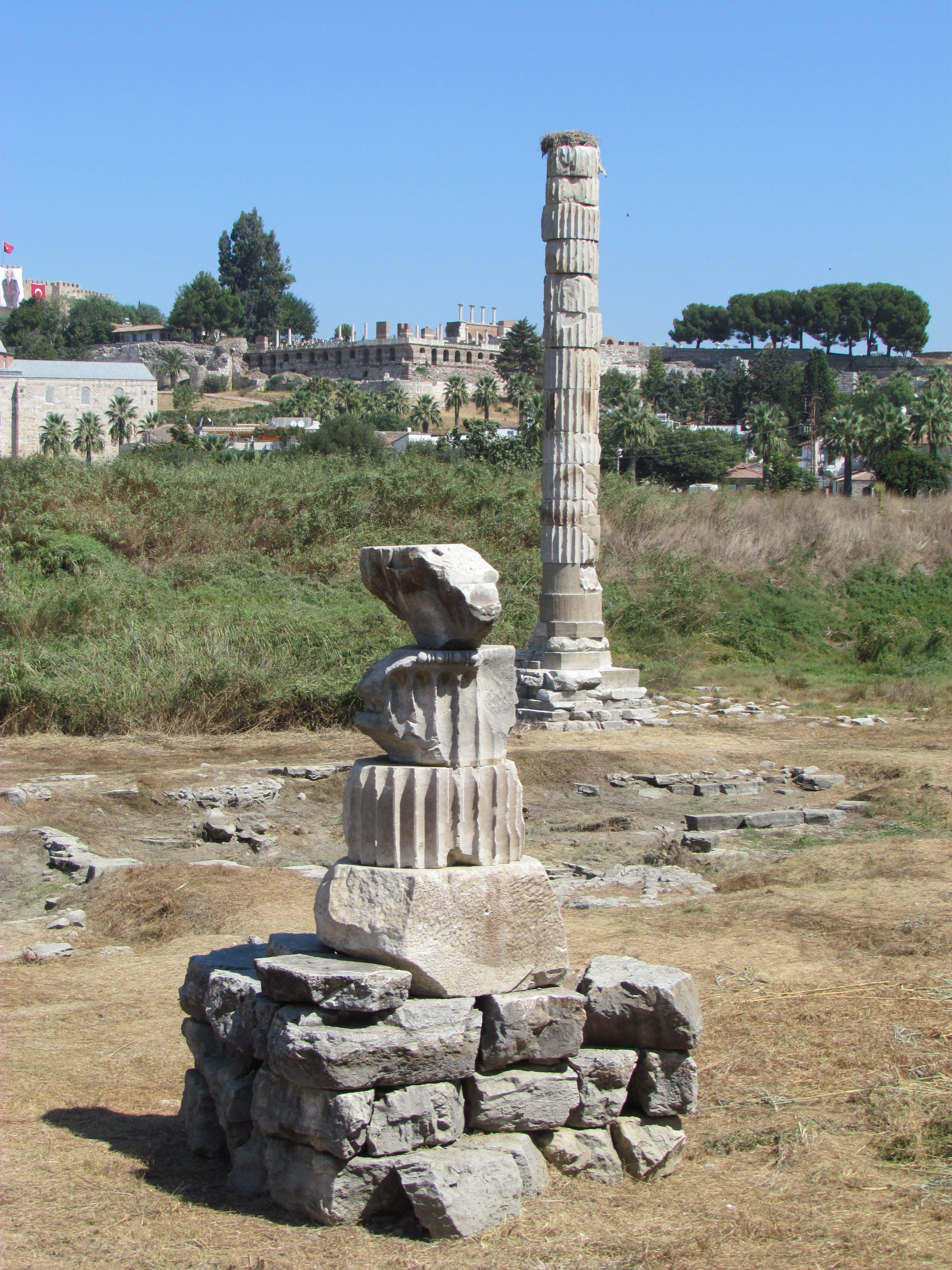
Ephesus, a veritable moral cesspool in Paul's day - The Temple of Artemis was the center of much of the wickedness. Like those in most pagan religions, its rituals and practices were but extensions of man’s vilest and most perverted sins. Male and female roles were interchanged, and orgiastic sex, homosexuality, and every other sexual perversion were common. Artemis was herself a sex goddess, represented by an ugly, repulsive black female idol that looked something like a cross between a cow and a wolf. She was served by thousands of temple prostitutes, eunuchs, singers, dancers, and priests and priestesses.
Idols of Artemis and other deities were to be seen everywhere, in every size and made out of many different materials. Of special popularity were silver idols and religious artifacts. It was because Paul’s preaching cut deeply into that trade that the Ephesian silversmiths rallied the populace against him and his fellow believers (Acts 19:24–28+). The temple of Artemis contained one of the richest art collections then in existence. It was also used as a bank, because most people feared stealing from within its walls lest they incur the wrath of the goddess or other deities. A quarter mile-wide perimeter served as an asylum for criminals, who were safe from apprehension and punishment as long as they remained within the temple confines.
For obvious reasons, the presence of hundreds of hardened criminals added still further to Ephesus’s corruption and vice. The fifth-century B.C. Greek philosopher Heraclitus, himself a pagan, referred to Ephesus as “the darkness of vileness. The morals were lower than animals and the inhabitants of Ephesus were fit only to be drowned.” There is no reason to believe that the situation had changed much by Paul’s day. If anything, it may have been worse. The church at Ephesus was a small island of despised people in a giant cesspool of wickedness. Most of the believers had themselves once been a part of that paganism. They frequently passed by places where they once caroused and ran into friends with whom they once indulged in debauchery. They faced continual temptations to revert to the old ways, and the apostle therefore admonished them to resist. (See MacArthur New Testament Commentary).
It’s a downward spiral for those who don’t know the Lord, starting with futility in the mind and ending with a callous heart in the darkness with “anything goes”. You can certainly see echoes of Ephesus in our modern world and this had to be a challenging place for the early Christians there. I find it fascinating that hardened criminals were protected in the temple confines; this is echoed in the “soft on crime” mentality of many judges and politicians in our time who excuse crimes because of someone’s “cultural context”.
Precept Austin has some good thoughts on this passage:
So the Gentiles were (and in our society today are) living in a ''fog'' -- a quality of thinking that leads to no purpose and is profitless and depraved. Their life was empty, purposeless, and fruitless. There was great activity but no progress. They chased bubbles and shadows (cf 2Co 4:18+), and neglected the great realities of life. Depravity blinds one to the nature and will of God. Human reason can defend any life-style because sin controls reason (cf Jdg 21:25+). Sin hardens (Heb 3:13+) our intellectual capacities and leads us away from TRUE LIFE. Sin results in a consuming desire to do what is wrong. The life of a pagan Gentile compared to a Gentile believer was (is) like the difference between light and dark, Heaven and Hell.
Enduring Word has this commentary on this passage:
b. No longer walk as the rest of the Gentiles walk: The Gentile walk is characterized by the futility of their mind. In the end, their thinking is futile because their understanding is darkened – because they are alienated from the life of God.
i. This is not to say that man, in his rebellion against God, is not capable of mighty intellectual achievements. Instead it is to say that all such achievements fall short of true wisdom, because the fear of the LORD is the beginning of wisdom (Proverbs 9:10).
ii. Futility: “The thought is not that unregenerate minds are empty. It is that they are filled with things that lead to nothing.” (Vaughan)
iii. As Christians, we have a proper way and place to walk. It is as if Jesus turned us around and put us in the right direction, and now we have to walk and progress in that direction.
c. Because of the blindness of their heart: Fundamentally, the ignorance and lack of understanding of man is a heart problem. It is shown not only in a foolish denial of God, but also in his moral failures (licentiousness, uncleanness, greediness).
i. The Gentiles Paul speaks of were either atheists or they believed in gods who were themselves immoral. Therefore in their denial of the true God, they denied any standard of morality that they must answer to.
ii. Past feeling has the idea of one’s skin becoming callous and no longer sensitive to pain. It is the logical result of the blindness of their heart. Blindness can also be understood here as hardening, and this ancient Greek word “is used medically to denote the callus formed when a bone has been fractured and reset. Such a callus is even harder than the bone itself.” (Wood)
iii. Licentiousness is sin that flaunts itself, throwing off all restraint and having no sense of shame or fear; uncleanness is a broad word, mostly with reference to sexual impropriety.
iv. Barclay elaborates on the Greek word aselgeia, translated licentiousness: “The great characteristic of aselgeia is this – the bad man usually tries to hide his sin; but the man who has aselgeia in his soul does not care how much he shocks public opinion so long as he can gratify his desires.” (Barclay)
We must tell the truth in love, especially to other believers who are caught up in futility and blindness. It’s one thing for non-believers to behave in terrible ways; God will deal with them. It’s quite another if people think they are saved yet they indulge in the worst behaviors and are indifferent or even insensitive to the pain that others suffer or to the sins and immorality that they secretly (or not-so-secretly) love.
My next devotional examines Ephesians 4:20-24 - Putting on the likeness of God.
Heaven on Wheels Daily Prayer;
Dear Lord - Please help me to not be greedy about things that I enjoy or to fall into sinful and futile behaviors and deviate from Your plan for me. Amen.
Citations and Credits:
Scripture quotations taken from the (NASB®) New American Standard Bible®, Copyright © 1960, 1971, 1977, 1995 by The Lockman Foundation. Used by permission. All rights reserved. www.Lockman.org.
“G3153 - mataiotēs - Strong’s Greek Lexicon (NASB95).” Blue Letter Bible. Web. 8 May, 2026. <https://www.blueletterbible.org/lexicon/g3153/nasb95/mgnt/0-1/>.
“G3563 - nous - Strong’s Greek Lexicon (NASB95).” Blue Letter Bible. Web. 8 May, 2026. <https://www.blueletterbible.org/lexicon/g3563/nasb95/mgnt/0-1/>.
“G4656 - skotoō - Strong’s Greek Lexicon (NASB95).” Blue Letter Bible. Web. 8 May, 2026. <https://www.blueletterbible.org/lexicon/g4656/nasb95/mgnt/0-1/>.
“G526 - apallotrioō - Strong’s Greek Lexicon (NASB95).” Blue Letter Bible. Web. 8 May, 2026. <https://www.blueletterbible.org/lexicon/g526/nasb95/mgnt/0-1/>.
“G52 - agnoia - Strong’s Greek Lexicon (NASB95).” Blue Letter Bible. Web. 8 May, 2026. <https://www.blueletterbible.org/lexicon/g52/nasb95/mgnt/0-1/>.
“G4457 - pōrōsis - Strong’s Greek Lexicon (NASB95).” Blue Letter Bible. Web. 8 May, 2026. <https://www.blueletterbible.org/lexicon/g4457/nasb95/mgnt/0-1/>.
“G766 - aselgeia - Strong’s Greek Lexicon (NASB95).” Blue Letter Bible. Web. 8 May, 2026. <https://www.blueletterbible.org/lexicon/g766/nasb95/mgnt/0-1/>.
“G4124 - pleonexia - Strong’s Greek Lexicon (NASB95).” Blue Letter Bible. Web. 8 May, 2026. <https://www.blueletterbible.org/lexicon/g4124/nasb95/mgnt/0-1/>.
Precept Austin was accessed on 05/08/2026 to review commentary for Ephesians 4:14-16.
Commentary from Enduring Word is used with written permission and without any alteration. ©1996-present The Enduring Word Bible Commentary by David Guzik – enduringword.com. Within the Enduring Word commentary are the following references:
Barclay, William The Letters to the Galatians and the Ephesians (Philadelphia: Westminster Press, 1975)
Vaughan, W. Curtis The Letter to the Ephesians (Nashville, Tennessee: Convention Press, 1963)