


“Therefore be imitators of God, as beloved children; and walk in love, just as Christ also loved you and gave Himself up for us, an offering and a sacrifice to God as a fragrant aroma.”
Ephesians 5:1-2 NASB1995
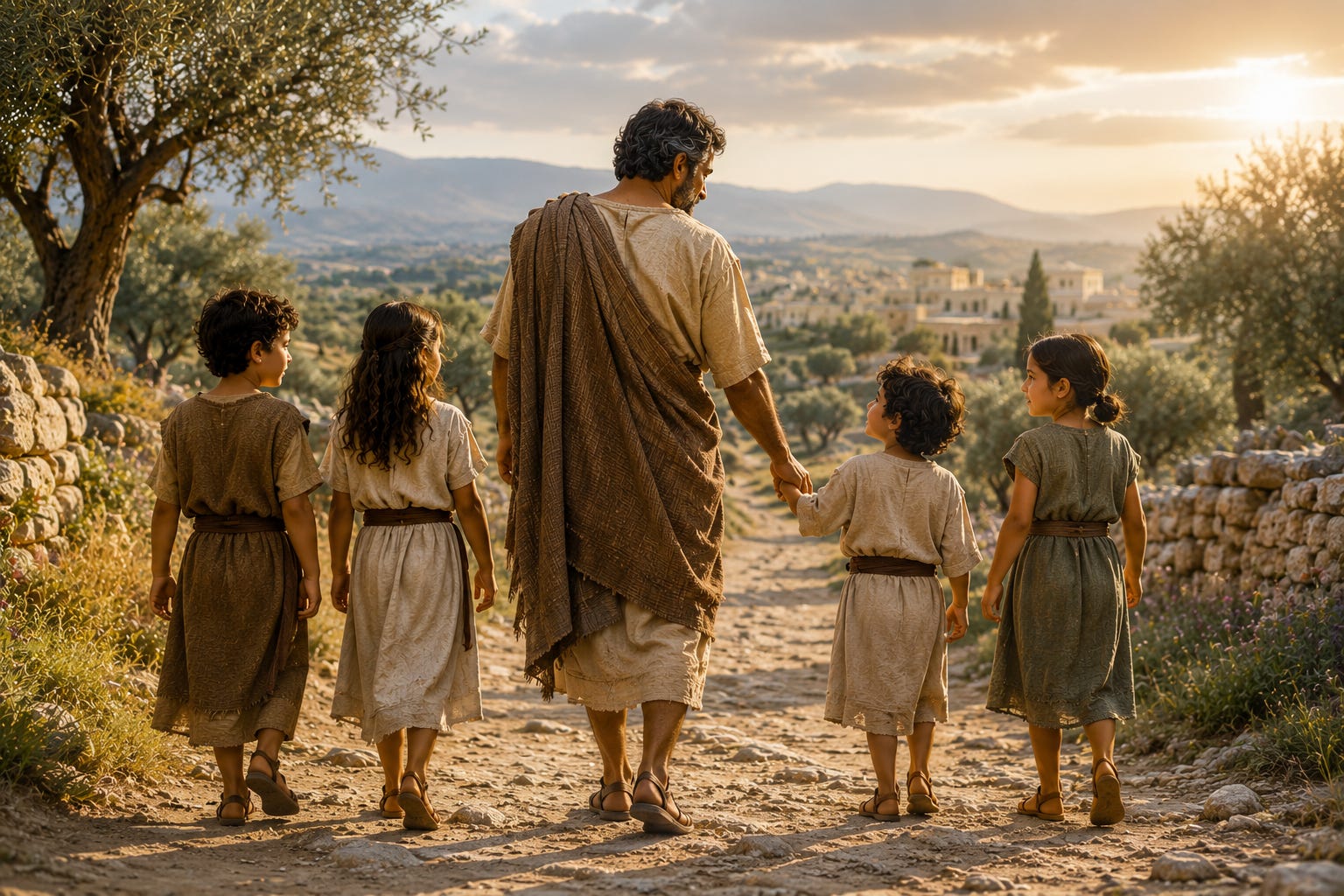
Paul continues the thoughts he shared at the end of chapter 4 (remember, chapter breaks in the Bible are an invention of humans). He wants the saints at Ephesus to be imitators of God, just like beloved children imitate their father and walk in love with him (I love the AI image at the top with beloved children and their father). I thought about doing a word study on imitator, but it simply means “to imitate or follow” (μιμητής or mimētḗs).
Enduring Word has good commentary on verse 1 of this passage:
b. Be imitators of God: The idea is simple – that we are to make God our example and model. We can’t content ourselves comparing us among men. We must heed the idea of 1 Peter 1:15-16: as He who called you is holy, you also be holy in all your conduct, because it is written, “Be holy, for I am holy.”
i. It does not say, “Think about God” or “Admire God” or “Adore God,” though those are all important Christian duties. This is a call to practical action, going beyond our inner life with God.
ii. We could say this is a continuation of the same idea Paul mentioned in Ephesians 4:13 regarding the extent of Christian growth: to a perfect man, to the measure of the stature of the fullness of Christ. We could also say that this is a continuation of the idea from Ephesians 4:32, where we were commanded to be forgiving one another, just as God in Christ also forgave you. God’s behavior towards us becomes our measure for our behavior towards one another.
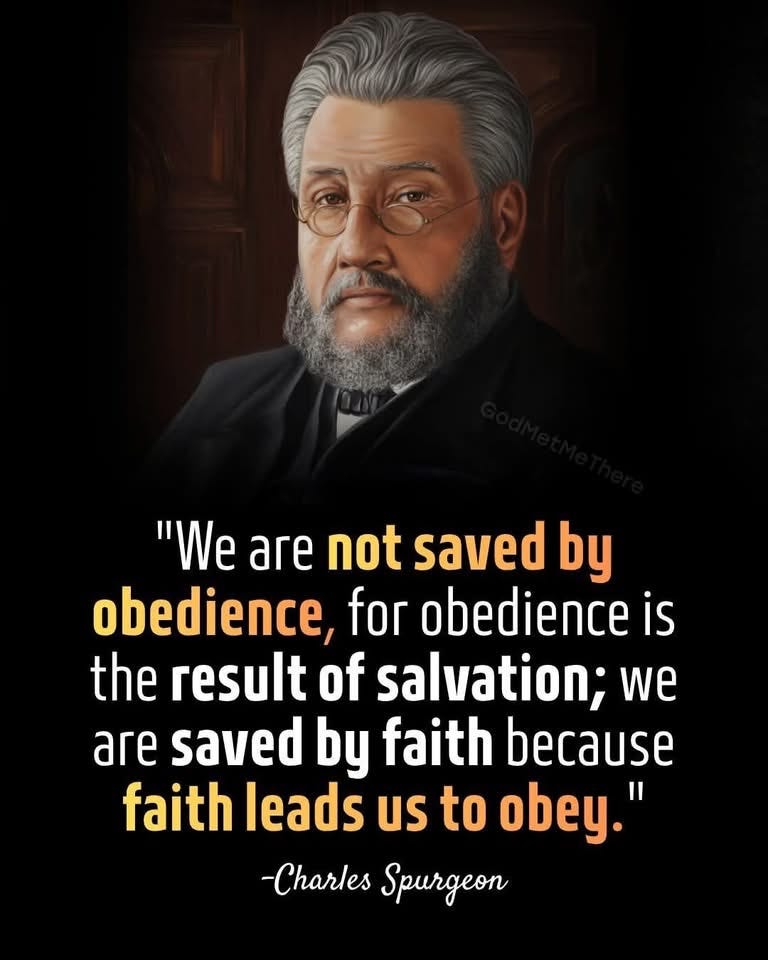
iii. It is important to see that God is far more than our example. Many errors come into the church when Jesus is presented only as an example of behavior. We are not saved by the example of Jesus, but once saved His example is meaningful to us. God is more than our example, but He is also our example.
c. As dear children: Children are natural imitators. They often do just what they see their parents or other adults do. When we act according to our nature as children of God, we will imitate Him.
i. As we do imitate God, we become representatives of God, especially before those who have shut God out of their life. “What are we sent into the world for? Is it not that we may keep men in mind of God, whom they are most anxious to forget? If we are imitators of God, as dear children, they will be compelled to recollect that there is a God, for they will see his character reflected in ours. I have heard of an atheist who said he could get over every argument except the example of his godly mother: he could never answer that.” (Spurgeon).
We don’t just think about God or adore God, we strive to be holy as He is holy. As noted above in the commentary, we are not saved by the example of Jesus. However, once saved, His example becomes meaningful to us. Charles Spurgeon puts it this way:
Precept Austin has a good example of the privilege of imitating our Lord:
In 1839 David Livingstone heard Robert Moffat speak about missionary opportunities in Africa:
“I have sometimes seen, in the morning sun, the smoke of a thousand villages where no missionary has ever been.”
Livingstone was accepted as a missionary to the African interior. Livingstone discovered Victoria Falls (aerial view) and was awarded the London Royal Geographical Society’s gold medal for crossing the African continent from west to east. But he paid dearly: A lion mauled his left arm and rendered it useless; his wife died while in Africa when he was forty-nine; he lost a son in the Battle of Gettysburg; his daughter died of fever in the jungle; his house was destroyed during the Boer War; and he himself endured rheumatic fever and other illnesses.
Livingstone wrote in his journal:
“People talk of the sacrifice I have made... Can that be called a sacrifice which is simply paying back a small part of the great debt owing to our God, which we can never repay? Is that a sacrifice which brings its own blest reward in healthful activity, the consciousness of doing good, peace of mind and a bright hope of glorious destiny hereafter? Away with the word in such a view and with such a thought! It is emphatically no sacrifice. Say rather it is a privilege.”
Do you desire to imitate Jesus Christ? Today in prayer, thank Christ for the love that He has given you. It is a privilege to live a life of love.
“Circumstances may appear to wreck our lives and God’s plans, but God is not helpless among ruins. Our broken lives are not lost or useless. God’s love is still working. He comes in and takes the calamity and uses it victoriously, working out his plan of love.”—Eric Liddell (Generation to Generation - Peter Kennedy).

Livingstone’s testimony about his privilege of serving God is wonderful! According to other information I read, his son died in one of the Confederate POW camps during the Civil War (and not at Gettysburg). Here’s a picture of the glorious Victoria Falls that he “discovered” (well, he was the first European to see the falls); we saw these falls on an amazing trip to Southern Africa in 2009:

Precept Austin has commentary about walking in love because of Christ’s love for us and how He gave Himself up for us as an offering and a sacrifice:
d. Walk in love, as Christ also has loved us: As in all things, Jesus is our example. As He has loved us and has given Himself for us, we are to display the same kind of self-giving love.
e. An offering and a sacrifice: Jesus’ giving of Himself was obviously a sacrifice pleasing to the Father. We can also offer a pleasing sacrifice (a sweet-smelling aroma) as we give ourselves in love to others.
i. We often think we could lay down our life in a dramatic way to show our love for others. But God often calls us to lay down our life little by little – in small coins (as it were) instead of one large payment – but it is laying down our lives nonetheless.
ii. Adam Clarke on an offering: “An oblation, an eucharistic offering; the same as minchah, Leviticus 2:1 and following, which is explained to be an offering made unto the Lord, of fine flour, with oil and frankincense. It means, any offering by which gratitude was expressed for temporal blessings received from the bounty of God.”
iii. Adam Clarke on a sacrifice: “A sin-offering, a victim for sin; the same as zebach, which almost universally means that sacrificial act in which the blood of an animal was poured out as an atonement for sin. These terms may be justly considered as including every kind of sacrifice, offering, and oblation made to God on any account.”
Our sacrifice should be a pleasing sacrifice, a fragrant aroma. Let’s do a couple of word studies from the Blue Letter Bible lexicon:
Fragrant comes from the Greek feminine noun εὐωδία or euōdía (Strong’s G2175), with the following Biblical usages:
a sweet smell, fragrance
a fragrant or sweet smelling thing, incense, on odour or something sweet smelling
an odour of acquiescence, satisfaction
a sweet odour, spoken of the smell of sacrifices and obligations, agreeably to the ancient notion that God smells and is pleased with the odour of sacrifices
metaph. a thing well pleasing to God
This sacrifice is fragrant in that it is well-pleasing to God.
Odor comes from the Greek feminine noun ὀσμή or osmḗ (Strong’s G3744), with the following Biblical usages:
a smell, odour
Odors can be very bad, but this odor is qualified by the term fragrant. There’s an interesting usage again of these terms in 2 Corinthians:
“But thanks be to God, who always leads us in triumph in Christ, and manifests through us the sweet aroma of the knowledge of Him in every place. For we are a fragrance of Christ to God among those who are being saved and among those who are perishing; to the one an aroma from death to death, to the other an aroma from life to life. And who is adequate for these things?”
2 Corinthians 2:14-16 NASB1995
Enduring Word commentary is worth examining on this passage in 2 Corinthians:
But thanks be to God, who always leads us in triumph in Christ, and manifests through us the sweet aroma of the knowledge of Him in every place. NASB95
a. Thanks be to God who always leads us: Paul dealt with criticism from the Corinthian Christians, who said he was unreliable and fickle because of his travel plans. He has explained himself and his reasons for not arriving when he had previously planned. More than anything, he wanted the Corinthian Christians to know he is following Jesus Christ as his General. More than any plan he may declare to the Corinthian Christians, Paul’s plan is to follow Jesus Christ.
b. Who always leads us in triumph in Christ: Here, Paul takes an image from the Roman world, seeing Jesus as the victorious, conquering general in a triumphal parade. A Roman triumphal parade was given to successful generals as they returned from their conquests.
i. “The idea is borrowed from an ancient Roman triumph, which to the eyes of the world of that day was the most glorious spectacle which the imagination could conceive.” (Meyer)
ii. “In a Triumph the procession of the victorious general marched through the streets of Rome to the Capitol… First came the state officials and the senate. Then came the trumpeters. Then were carried the spoils taken from the conquered land… Then came the pictures of the conquered land and models of conquered citadels and ships. There followed the white bull for sacrifice which would be made. Then there walked the captive princes, leaders and generals in chains, shortly to be flung into prison and in all probability almost immediately to be executed. Then came the lictors bearing their rods, followed by the musicians with their lyres; then the priests swinging their censers with the sweet-smelling incense burning in them. After that came the general himself… finally came the army wearing all their decorations and shouting Io triumphe! Their cry of triumph. As the procession moved through the streets, all decorated and garlanded, amid the cheering crowds, it made a tremendous day which might happen only once in a lifetime.” (Barclay)
iii. “That is the picture that is in Paul’s mind. He sees Christ marching in triumph throughout the world, and himself in that conquering train. It is a triumph which, Paul is certain, nothing can stop.” (Barclay) And, Paul sees himself as sharing in the triumph of Jesus, the Captain of the Lord’s Army, and Paul is one of the Lord’s chief officers!
c. Leads us: Paul wanted the Corinthian Christians to realize that he followed his general, Jesus Christ. Paul can almost see Jesus’ triumphal parade winding its way through the whole Roman Empire, throughout the entire world.
d. Diffuses the fragrance of His knowledge: Fragrance, in the form of incense, was common at the Roman triumphal parade. In Paul’s mind, this fragrance is like the knowledge of God, which people can smell as the triumphal parade comes by.
i. No sense remains in the memory like scent. There is nothing we remember more strongly than pleasant smells, except perhaps unpleasant smells. “Thus the apostle wished that his life might be a sweet perfume, floating on the air, reminding me, and above all reminding God, of Christ.” (Meyer)
ii. “A sweet savour of Christ! It does not consist so much in what we do, but in our manner of doing it; not so much in our words or deeds, as in an indefinable sweetness, tenderness, courtesy, unselfishness, and desire to please others to their edification. It is the breath and fragrance of a life hidden with Christ in God, and deriving its aroma from fellowship with Him. Wrap the habits of your soul in the sweet lavender of your Lord’s character.” (Meyer)
…
For we are a fragrance of Christ to God among those who are being saved and among those who are perishing; to the one an aroma from death to death, to the other an aroma from life to life. And who is adequate for these things? NASB95
a. To the one we are the aroma of death leading to death, and to the other the aroma of life leading to life: The scent of incense burnt to the gods in a Roman triumphal parade smelled wonderful to a Roman. The same aroma was a bad smell to a captive prisoner of war in the parade, who would soon be executed or sold into slavery.
b. We are to God the fragrance of Christ among those who are being saved and among those who are perishing: In the same way, the message of the gospel is a message of life to some and a message of condemnation to those who reject it (John 3:17-21).
i. “The same happens to the present day to those who receive and to those who reject the Gospel: it is the means of salvation to the former, it is the means of destruction to the latter; for they are not only not saved because they do not believe the Gospel, but they are condemned because they reject it.” (Clarke)
The Gospel is the message of life and knowledge of God is like a fragrant perfume from Heaven!
Our sense of smell is a marvelous gift! I recall doing a cruise on the lower Mississippi River many years ago as we were heading into New Orleans. We sat outside and marveled at the various industries that were along the river, but the smells were the thing we remembered best. There were the strong gasoline odors of the refineries, the acrid and almost nauseating smells emanating from a chemical facility, but then there were sweet smells from a sugar cane plant as raw sugar was loaded on a huge ocean-going ship and also the tart tang of the smell of citrus at a facility loading fruit onto barges and trucks.
One of the things we love to do on trips is to visit a local food market. You can sense the life of a community through these markets, smelling and looking at fresh fish, colorful flowers, freshly baked breads, mounds of spices and herbs, and fruits and vegetables among other beautiful things. This picture is from a spectacular three-story food market in Bilbao, Spain we visited many years ago (imagine the aromas of the various types of fresh fruit):

As believers, by imitating our Father, our sacrifice to God is from life to life and not death to death. We are not the foul odor of the tomb, but the sweet fragrance of the meadow where we are walking with our beloved Savior for eternity.
My next devotional examines Ephesians 5: 3-5 - Remove immorality and impurity and purge silly talk from your life.
Heaven on Wheels Daily Prayer:
Dear Lord - I thank you for the related message today that is from 2 Corinthians. May my life be a fragrant sacrifice. I can never repay Jesus for His sacrifice, but I can place one coin at a time. Amen.
Citations and Credits:
Scripture quotations taken from the (NASB®) New American Standard Bible®, Copyright © 1960, 1971, 1977, 1995 by The Lockman Foundation. Used by permission. All rights reserved. www.Lockman.org.
“G2175 - euōdia - Strong’s Greek Lexicon (NASB95).” Blue Letter Bible. Web. 26 May, 2026. <https://www.blueletterbible.org/lexicon/g2175/nasb95/mgnt/0-1/>.
“G5483 - charizomai - Strong’s Greek Lexicon (NASB95).” Blue Letter Bible. Web. 24 May, 2026. <https://www.blueletterbible.org/lexicon/g5483/nasb95/mgnt/0-1/>.
Precept Austin was accessed on 05/26/2026 to commentary for Ephesians 5:1-2. Links to the source documents are provided where appropriate.
Commentary from Enduring Word is used with written permission and without any alteration. ©1996-present The Enduring Word Bible Commentary by David Guzik – enduringword.com. Within the Enduring Word commentary (Ephesians and 2 Corinthians):
Spurgeon, Charles Haddon The New Park Street Pulpit, Volumes 1-6 and The Metropolitan Tabernacle Pulpit, Volumes 7-63 (Pasadena, Texas: Pilgrim Publications, 1990)
Barclay, William The Letters to the Corinthians (Philadelphia: Westminster Press, 1975)
Clarke, Adam The New Testament with A Commentary and Critical Notes, Volume II (New York: Eaton & Mains, 1831)
Meyer, F.B. Our Daily Homily (Westwood, New Jersey: Revell, 1966)
Thank you. I have been struggling with a loss for years. This helped reground me.