

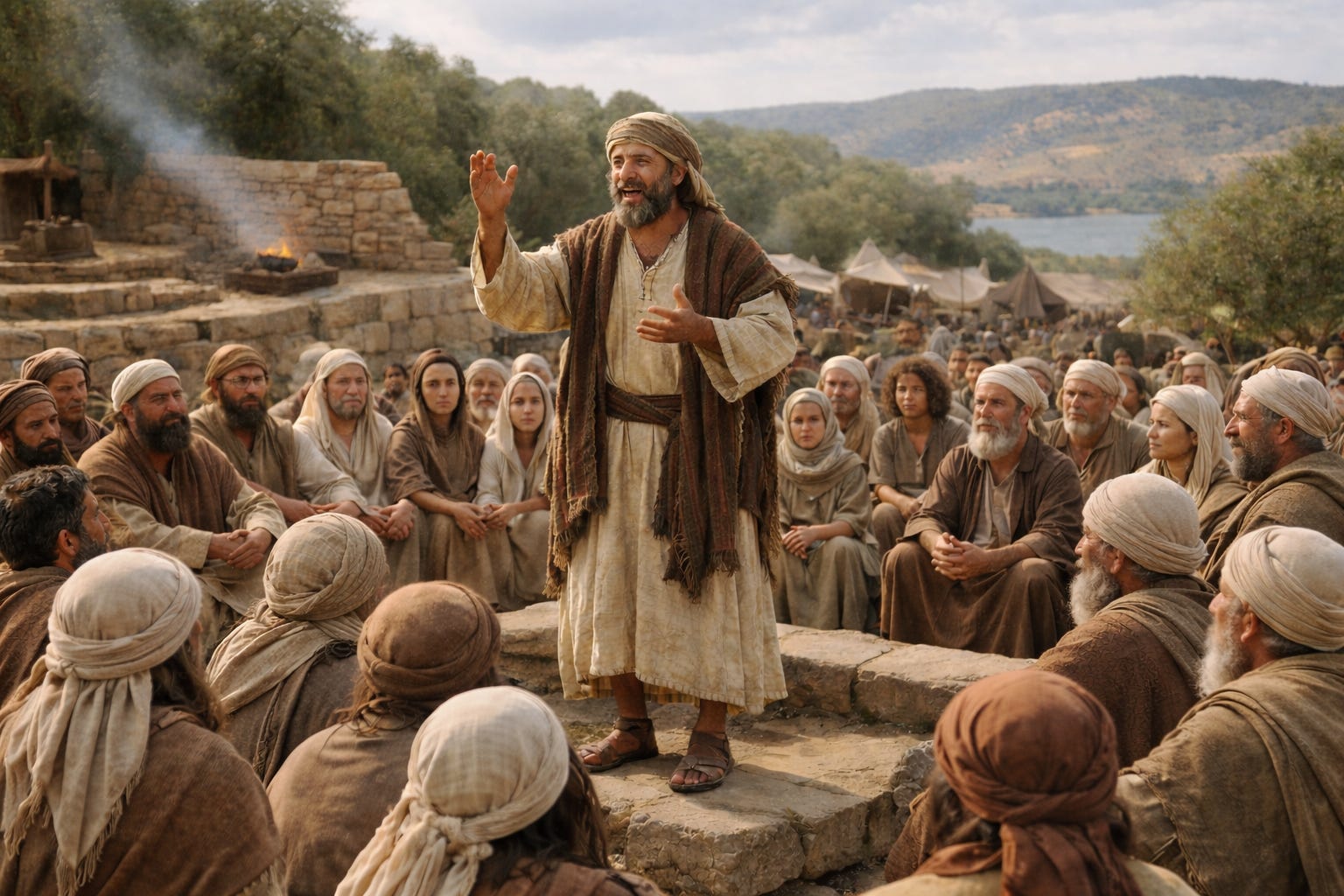
Image generated by ChatGPT (OpenAI) using the DALL·E model.
“Come and hear, all you who fear God; let me tell you what he has done for me. I cried out to him with my mouth; his praise was on my tongue. If I had cherished sin in my heart, the Lord would not have listened; but God has surely listened and has heard my prayer.”
Psalms 66:16-19 NIV
Psalm 66 is not one of the psalms of David. It is a wonderful song of praise to God, and in a note by Daniel Cresswell cited in Spurgeon’s commentary on this psalm, he says “This Psalm is said to be recited on Easter day, by the Greek church: it is described in the Greek Bible as A Psalm of the Resurrection, and may be understood to refer, in a prophetic sense, to the regeneration of the world, through the conversion of the Gentiles.”
Prior to these verses, the psalmist describes his praise of God through animal sacrifices and gifts, the typical pre-Christian way of giving God thanks. In Psalms 66:13-15, he’s not only offering sacrifices, but fulfilling his promises to God by offering only the most choice animals — fat rams, bulls, and goats.
Fortunately for us, through the one-time sacrifice of Jesus on the cross, we have no need to go through elaborate bloody animal sacrifices to atone for our sin. The psalmist realized in today’s verses that even those sacrifices weren’t enough — he needed to publicly praise God with his words in order to fulfill his vow to the Lord. He was speaking with his actions, but he also needed for his words to have an impact.
Derek Kidner, cited on Enduring Word, created this mental picture of the scene at which these words were first sung:
i. “We may picture the scene of public worship, perhaps at Passover or at a victory celebration, in which the corporate praise gives way to the voice of this single worshipper, who stands with his gifts before the altar, and speaks of the God whose care is not only world- and nation-wide, but personal: I will tell what he has done for me.” (Kidner)
In his call to “Come and hear”, the psalmist is calling the faithful to pay attention to his testimony. At the time, there were no mega-churches or online Sunday worship streams — oral tradition was the main way of communicating and teaching, and calls like this were common at public gatherings and in the synagogues. He’s also calling a specific audience — “all you who fear God” — those who have respect for God, who honor God’s power and authority over all.
The rest of the first verse — “let me tell you what he has done for me” — is personal testimony, perhaps the most effective way to share one’s faith with others. The psalmist is inspiring the community of faithful through his public proclamation to trust in God. He has seen how God has intervened and blessed his life, and that is a message that should resonate with each of us — God has a personal relationship with all believers.
In the New Testament, personal testimony is much more prevalent than it was in the Old. Think of Paul’s accounts of his conversion and his ministry starting in Acts and continuing through the many epistles.

In the next verse, the psalmist is sings of crying out to God, showing just how important the spoken word is in worship and in prayer. He would have been intimately familiar with the words of Exodus 3:7, where we see that the Lord hears the cries of His people and responds. He emphasizes this with the words “his praise was on my tongue”, and expands his praise from a personal expression to a communal one. Like the faithful today, the Israelites gathered together regularly to sing and praise God.
More testimony and advice appears in the next two verses. The psalmist knows why God is listening to him — “If I had cherished sin in my heart, the Lord would not have listened”. Through righteous living and keeping the covenant, God is listening and acting on his prayers. God wants genuine repentance and righteousness, not lip service! In 1 John 1:9, the apostle tells us that “If we confess our sins, he is faithful and just and will forgive us our sins and purify us from all unrighteousness.”
God is not only listening, but acting: “but God has surely listened and has heard my prayer.” John also reminds us of this in 1 John 5:14-15: “This is the confidence we have in approaching God: that if we ask anything according to his will, he hears us. And if we know that he hears us—whatever we ask—we know that we have what we asked of him.”
What a beautiful lesson in song — testifying to God’s grace and mercy when we are repentant and righteous.
Heaven On Wheels Daily Prayer:
Father in Heaven, I come before you today with a grateful heart, and wish to share the good things You have done for me with others. When I cried out to You, Lord, I knew You heard my voice. You are ever-faithful and loving, always paying attention and responding to my prayers. I know that if I had put sin ahead of all else in my heart, You would not have listened. I know that I have many shortcomings, and I confess those and seek Your forgiveness. Thank You for the constant assurance that You have listened and heard my prayers. I have faith in You, and know You will answer in accordance with Your perfect will and timing. May my life reflect Your glory, and may I always remember to praise You for Your love and goodness. AMEN.