


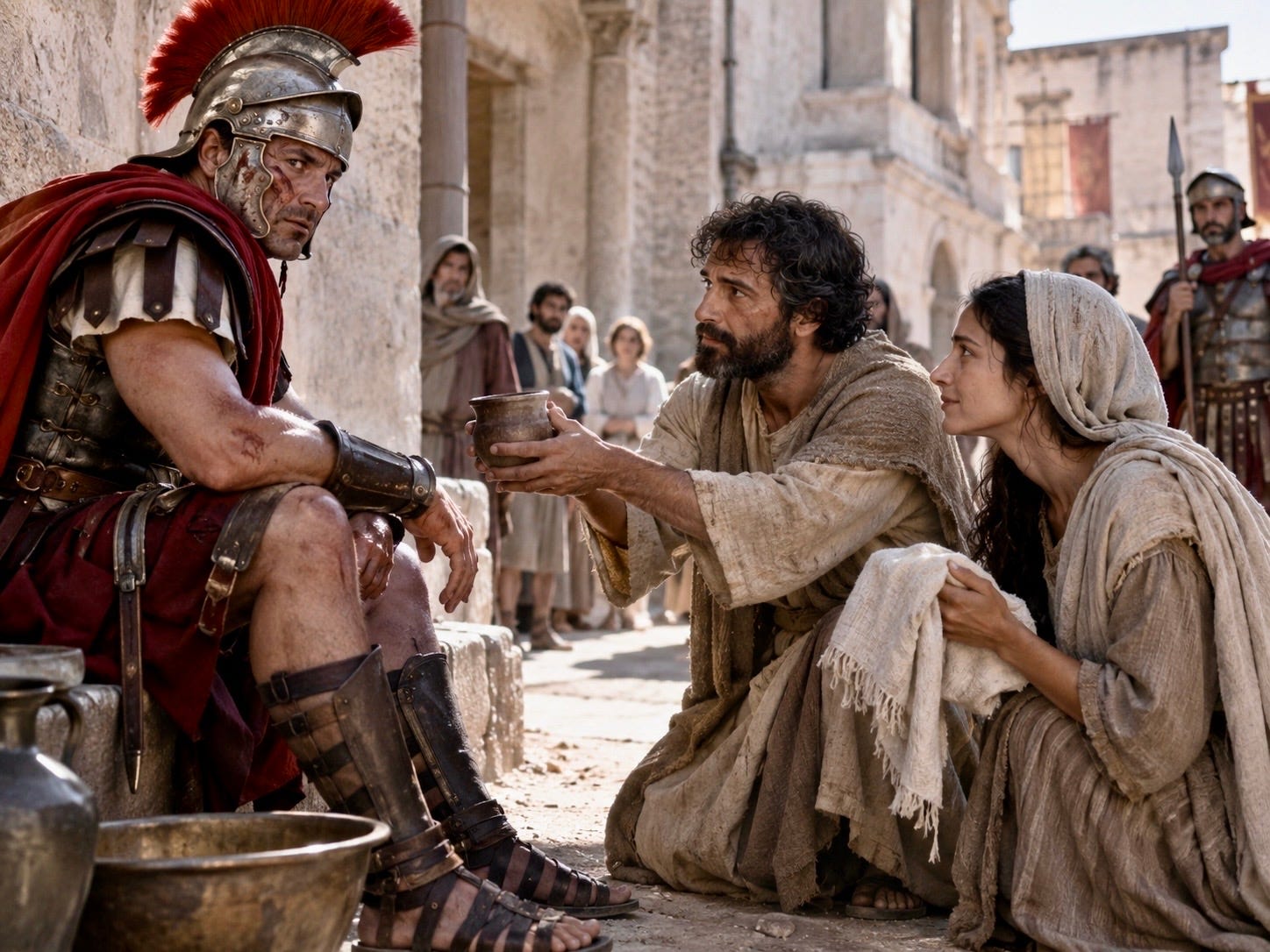
Image generated by ChatGPT (OpenAI) using the DALL·E model.
“Bless those who persecute you; bless and do not curse.”
Romans 12:14 NIV
The Epistle to the Romans is the longest of the thirteen epistles written by the apostle Paul, and of all of the letters he wrote, it is the most instructive to Christians. It defines the Gospel, the Good News of salvation through Jesus Christ, and proves that mankind is justified by faith alone. Paul explains how mankind is so corrupt and dead in terms of godly living or thinking that it is impossible to keep the law of Moses as laid out by God, thus making it necessary for Jesus to die on the cross and be resurrected so that those who honestly profess their faith in Him are saved from an eternity of separation from God.
Chapter 12 of the epistle begins to explain how the Gospel transforms believers, and describes the behavior resulting from that transformation. In Romans 12:2, Paul characterizes the transformation:
“Do not conform to the pattern of this world, but be transformed by the renewing of your mind. Then you will be able to test and approve what God’s will is—his good, pleasing and perfect will.”
We’ve said it before in our devotionals, but it bears repeating again: Just saying that you’ve “accepted Jesus into your life” is meaningless, unless there is a true transfiguration of your brain. The New Testament uses the Greek word μετάνοια (metanoia) in the synoptic gospels of Matthew, Mark and Luke to describe this change. Metanoia can be simply described as repentance, but has a much deeper meaning. The Greek Orthodox Church in America defines the term in this way (via Wikipedia):
The Greek term metanoia denotes a change of mind, a reorientation, a fundamental transformation of outlook, of man's vision of the world and of himself, and a new way of loving others and God. In the words of a second-century text, The Shepherd of Hermas, it implies "great understanding", or discernment.[6]
Much of Romans is made up of Paul’s explanations of how believers should live. Christians aren’t bound by the law of Moses, but live under the grace of God. They don’t need to live under Mosaic law because metanoia has renewed their minds so that they know instinctively how God wants them to behave. The law still has purpose, that of providing a standard to judge how far along we are in the lifelong process of being transformed.
A History Lesson
Paul begins this verse with the statement “Bless those who persecute you”. At the time Romans was written (about 57 AD), persecution of Christians was not widespread throughout the Roman Empire. Instead, it was quite localized and came from the Jewish religious authorities, civic officials, some of the rulers of Judea, and angry mobs.
For example, Peter and John publicly preached about the resurrection of Jesus in the mid 30s AD, and were arrested at the order of the Sanhedrin, the Jewish religious elite. Later they were arrested again, flogged, and told never to speak in the name of Jesus. About the same time, Stephen was executed by stoning, followed quickly by Christians being forced to flee Jerusalem and move to Samaria and other parts of Judea. Paul (as Saul before his conversion on the road to Damascus) went from house to house, dragging off Christian men and women for imprisonment… or worse.
Around 44 AD, King Herod Agrippa I of Judea stepped up the persecution by having James, the brother of John, executed by sword. He followed his up by arresting Peter and wanted to put him on public trial as well. These marked the first acts of persecution from a political ruler rather than religious authorities.
Paul and Barnabas were the victims of mob violence throughout their missionary work, with Paul summarizing his personal tribulations by saying he had been repeatedly imprisoned and beaten, received the thirty-nine lashes five times, was beaten with rods three times, and been stoned once.
The Roman civic authorities decided that Paul and Silas were disturbing the city of Philippi around 49-50 AD, and had them stripped, beaten with rods, and confined to prison with their feet in stocks. At this point, Christianity had not yet become a formal target of the Roman Empire. That happened for Jewish Christians around 49 AD, when the Emperor Claudius ordered Jews to leave Rome.
By the time Paul wrote Romans, Jewish believers had returned to Rome, and the church in Rome contained both Jewish and Gentile Christians who had experienced persecution. Paul was speaking from experiences that would have been familiar to the readers of his letter. In today’s verse, he describes how to live by faith, having undergone transformation (metanoia) and viewing reality through eyes that see with the truth of God rather than through the false reality of the world.
Paul advises his readers against reacting to persecution in the way that the world would expect — by engaging in conflict and defending themselves with anger. Instead, he suggests blessing their enemies, a tangible way of living their faith. Blessing those who persecute you frees you from letting others control you. Blessing our persecutors rather than cursing them shows that we are free, and we experience joy regardless of what is done to us.
Heaven On Wheels Daily Prayer:
Lord, help me to bless those who persecute me and not to curse them, so that I may reflect Your love and grace in my life. Teach me to seek the best in those who wish to harm me, and remind me to pray always for those who I find it a challenge to deal with. Show me opportunities to display kindness to those who may not treat me well. AMEN.